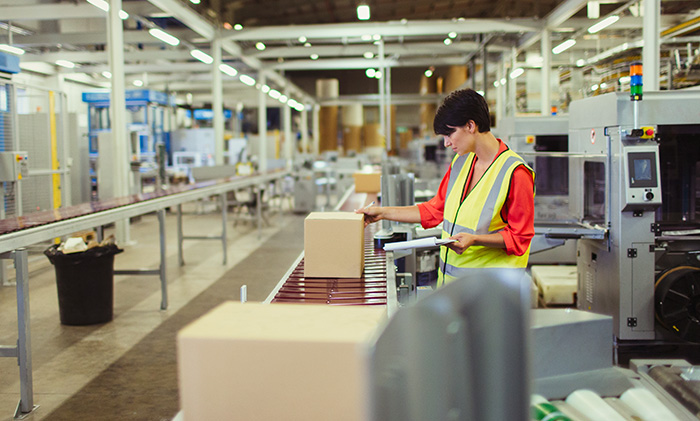
In the not-too-distant past, most companies that weren’t running immense distribution operations, who didn’t have multiple facilities, who didn’t run 24-hour shifts, didn’t even consider automation. Too expensive, they’d say. Too much risk. Too little upside if things go wrong. All valid in context, if we were in 1998. But the reality is this: While most costs—personnel, land, energy— have increased, automation costs have remained steady or declined across the board. The reality today is that the four guys stacking pallets at the end of a line, even for a single shift, even at low wages, are more expensive than a well configured palletizing system.
Those costs aren’t going to do anything but escalate, either. Listed are ten ways automation has become more relevant, even to mid-size operations:
Especially as the economic recovery continues, it’s important to control costs in your operation. What are some warehousing cost-cutting methods you can employ that don’t require extensive investment or re-tooling? Most of the costs of warehousing operations fall into the following categories:
It’s that season – facilities across the country are facing mounting utility bills, workers drenched in sweat, and ferocious heat. Typically, an HVLS fan is one of the best solutions to these issues, but MacroAir has gone one better by producing these massive air movement ceiling fans in a solar configuration. This innovation does a couple of things. First, it cools your facility during the day, using the same method other HVLS fans use. But beyond that, it’s a very green product, one that reduces your energy costs and carbon footprint. Currently, these fans come in solar-only configurations. They won’t run when the sun is down, and they do not have battery backup systems. However, there is an option being designed to allow you to tie them to building power for night time or non-seasonal applications.
It ought to be fairly simple, but specifying the right workbench for your application is something that deserves thought and pre-planning. Minor differences in the type of bench can provide critical benefits that add up to major productivity gains over time. Benches aren’t the simple, static equipment many believe. Here are some traits to consider
Application: A clear, flat surface is the basis for most workstations. The bigger question is this: how will it be used? Will you be packing orders? Repairing or assembling? Will it integrate with conveyors or assembly lines? Will you need access to certain supplies? Ergonomic considerations will play heavily into this part of the decision making process.
If you utilize an air balancer in your operation, how can you know you’re safely handling loads? Balancers inherently create a safer, more ergonomic operation by removing manual lifting and positioning (even of heavy items) and replacing it with a near-float system, where heavy loads are lifted and positioned by the balancer – not by people.
Here are some tips from Ingersoll Rand to make your operation even safer…
As Spring kicks into gear, the heat of summer hasn’t hit yet in most places. The time to implement facility changes that could help you control climate costs and provide a better atmosphere for your operations is now, not once the weather has changed. It’s not just a matter of air systems; smaller, incremental changes at entry points or near work areas can have a big impact on worker comfort and productivity. Theses changes can also save you money.
As temperatures climb, more air conditioning isn’t always the best, or even the most effective solution – and it’s certainly not the most cost effective.
This video is a short few minutes, and features vertical reciprocating conveyors implemented by Cisco-Eagle at defense contractor Electric Boat, Inc. The company manufactures submarines at its Groton, CT facility.
Designing your conveyors and workstations to work together gives you significant safety and efficiency advantages. Using conveyors is a good way to reduce the risks of musculoskeletal injury in tasks or procedures that involve manual handling because conveyors reduce the need for repetitive lifting and carrying, but implementing conveyor into workstations requires some basic understanding of how to prevent stress. As a bonus, well-implemented conveyor workstations also boost productivity.