






Your shopping cart is currently empty.
Co-Location & Datacenter Wire Partitions & Cages: Flexible Security
Secure your servers, power panels, and other critical infrastructure
Datacenter Cages: Let's TalkAbove: a walkthrough on the versatility and security of wire cages for datacenter applications.
Flexible security for servers, power supply and other electronics
Physical access is a weak point in server security
Data centers, server farms, and other technical areas are all vulnerable security points with a driving need to control access. Companies have millions of dollars of digital assets on servers and often depend on just a locked room to keep them safe.
Data centers often house the crown jewels in the form of information assets comprising IT hardware mainframes and other computer servers, disk farms, tape silos, networking equipment, and enormous amounts of extremely valuable business data and highly-skilled IT workers. Concentrating so many high value items in an enclosed space increases the vulnerability to common physical threats such as thefts, criminal or accidental physical damage.
Protecting data from digital thieves is often a massive effort with little attention sometimes paid to the physical server farm, generators, control systems, servers, computers, and electronics.
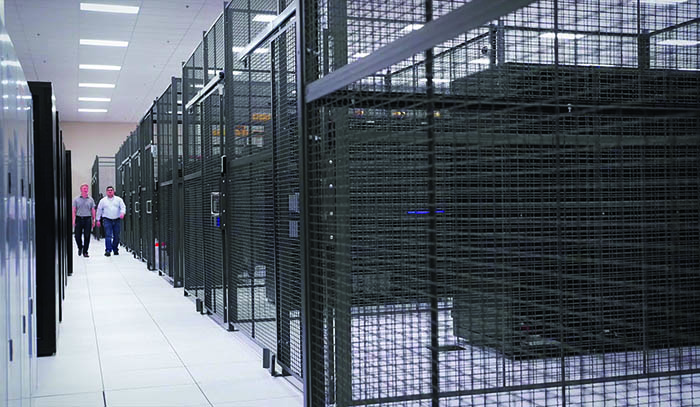
Sensitive equipment should always be protected behind locked doors or partitions with limited access
Servers and other information system equipment should be locked and access controlled. Wire mesh partitions are perfect because they can fit nearly any configuration from a continuous long wall to doors between blade server racks to secure access. They don't inhibit ventilation or heat discharge. And it's modern looking, attractive security, not some fencing that makes the room look like a warehouse. Your clients and your internal support personnel will appreciate the enhanced security and aesthetics. They can also extend into a drop floor or recessed ceiling with relative ease.
Solid security with the flexibility you need
The flexibility to decide access for who, how and when
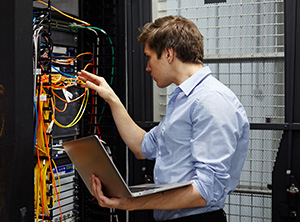
Even in a locked room, neither unauthorized employees or external service personnel (janitorial services, salespeople, or maintenance crews) should never have access to servers. Caging gives you the flexibility to decide who, when and how these secure spaces are accessed.
In the room, but denied server hardware access
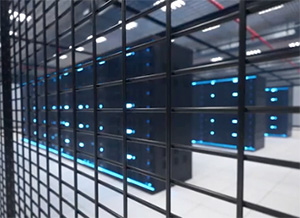
Servers surrounded by security partitions are safer from intrusion and potential data breaches no matter who gains access to the room. This is a second layer of configurable security and compliance.
Multiple levels of access control
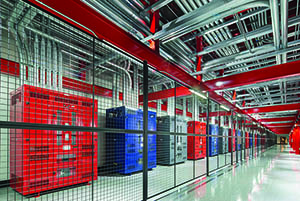
Server rooms are sometimes dual-purpose with other storage or uses. This means you may not be able to keep people out of your data center, but you can keep them away from delicate equipment with lockable wire security cages.
Access for side-by-side applications or varying tasks
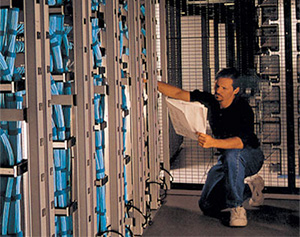
Cage systems allow side-by-side server rack storage, which lets you implement both enhanced security without compromising access for individual, multiple, or enterprise-wide security.
The flexibility to change anything, just about anytime
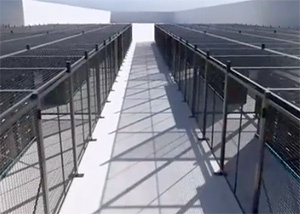
Since the system is modular and configurable, you can add to it, redo it, or scale it to your needs with a minimum of hassle. This means you can use, re-use and re-configure your system when layouts, customer needs or other changes occur. Expansions are easy and seamless.
Locking systems from key locks to biometric readers
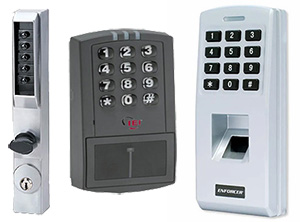
Many options are available for locking and access. You can specify standards such as key locks, or go all the way to modern, biometric locking systems. Card access systems help you trace access to the level you need to for compliance and security for sensitive clients and data. See all locking options
How security cages fit into layered datacenter security strategies
Modern datacenters rely on a layered or "defense-in-depth" security model. No single physical or digital security method can fully protect critical infrastructure on its own. Effective datacenter protection is built from multiple complementary layers to reduce risk, limit exposure, and control who can access sensitive hardware. Security cages play a central role within this structure by providing rack-level physical separation inside the facility. They're most effective when integrated with other systems.
| Security Layer | What It Includes | How Security Cages Support This Layer |
|---|---|---|
|
Perimeter & Building Access Controls |
The outer shell security for the datacenter. Fencing, secured entrances, guards, visitor management, card or biometric building access. | Cages provide an inner barrier so only authorized personnel can reach specific racks or tenant areas once inside the facility. |
| Surveillance & Monitoring | This is the visibility and recording layer, including CCTV coverage, video analytics, remote monitoring and audit logs of activity on the datacenter floor. | Cameras focused on cage doors create auditable records of who attempts to enter protected areas, improving incident response and supporting compliance. Cage doors can be locked with trackable card or biometric readers. |
| Interior Access Control & Logging | This is the "who gets close to the hardware" layer. It includes badge readers, keypads, biometric locks, and detailed access logs for multi-tenant or segmented spaces. | Cages allow each customer, department, or tenant to have independent access control, ensuring only approved personnel reach sensitive servers or storage. |
|
Intrusion Detection & Alarm Integration |
Door contacts, motion sensors and alarm systems that trigger on forced entry or tampering. | Cage doors can integrate with alarms to provide immediate alerts when someone attempts unauthorized access, helping minimize downtime, loss, or damage. |
| Environmental & Fire-Safety Systems | Cooling and airflow management, fire suppression, temperature and humidity monitoring, and other environmental controls. Cages lend themselves to suppression systems. | Wire mesh cage panels maintain ventilation, visibility, and sprinkler coverage so security does not compromise uptime, cooling performance, or safety systems. |
| Operational Controls & Personnel Policies | This layer defines how people work in the datacenter. Vendor and contractor rules, maintenance procedures, escorted access, and internal governance and audits. | Cages reinforce operational discipline by limiting who can physically touch equipment, supporting policy enforcement, change control, and audit readiness for regulated environments. |
In open layout applications, security partitions allow you to maintain visibility and still lock your servers behind extremely strong wire fencing.
Co-location and server cage features
- Enclosed hardware: the partition hardware isn't accessible from outside, making it difficult to break into
- Wire mesh design allows passage of air for cooling. Also does not inhibit fire control devices
- Flexible: system utilizes twenty standard panels to accomplish nearly any layout. These panels simply bolt between posts
- Easy to install: Drawings provided with each order make installation easy enough for your own personnel. System installs as fast or faster than any other system on the market. Our angle frame panels with slotted bolt holes give clear access to assembly hardware and allow fine tuning adjustments without compromising the strength of the installation. Our system does not require level floors and precise alignment like some hook and slot mounting systems
Contact us today for assistance with your project.