








Your shopping cart is currently empty.
Which low-clearance bar fits your application?
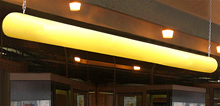
When choosing a low-clearance warning bar, start with where it will be installed and how drivers approach the restricted area. Suspended bars work well when you have an overhead structure available, while freestanding systems provide a warning point where there is nothing suitable to hang from. We offer fixed and swinging freestanding configurations, along with suspended bars in several diameters and lengths.
Visibility and messaging are the next considerations. Standard yellow bars provide a highly visible physical warning, while custom-imprinted versions let you add clearance heights or other short messages directly to the bar. Several models also offer different bar and lettering colors, which can help match existing traffic-control standards or make the warning easier to distinguish in a particular environment.
Quick selection guide
| If you need... | Look for... | |
|---|---|---|
| A simple warning beneath an existing structure | Suspended clearance bar | |
| A warning point with no overhead mounting location | Freestanding system | |
| Drivers to see the actual clearance height | Custom-imprinted bar | |
| More visual presence from a distance | Larger-diameter bar | |
| Flexibility if the bar is contacted | Swinging configuration | |
| A fixed warning point | Fixed freestanding configuration | |
| More attention than a passive bar provides | Powered warning system |