













Your shopping cart is currently empty.
Pallet Flow Rack Storage Systems
High density, first in, first out racking systems deliver fast throughput
Ask our Experts!Flow storage consists of two elements: a static rack structure and dynamic flow rails. The flow rails are a track/roller system set at a decline along the length of the rack. Flow rails allow loads to move by gravity from the loading end to the unloading end. Each flow lane includes self-energized speed controllers (brakes) to gently control the speed of movement within the flow lanes. As a load is removed, the loads behind it move forward to the unloading position. The flow system depth, height, and width are limited only by the size of your facility and the capabilities of your material handling equipment. Flow Storage solutions are used in situations where storage density and inventory rotation are priorities.
How we'll help you optimize pallet density and throughput
First-in, first-out (FIFO) inventory control for maximum efficiency

Pallet flow systems transport pallets from the loading to the unloading side of the system. The first pallet in is the first removed, which enforces constant stock rotation—essential to perishable or time-sensitive goods. If you need FIFO pallet storage, most other methods are operational and enforced by process and practice. This forces forklift operators to choose the right pallet, track inventory age and constantly reposition inventory. It gets easy to make a mistake.
Pallet flow changes this dynamic by embedding FIFO into the system. Rotation is automatic. There is no need for decision-making or re-handling to maintain the sequence.
Read more: First-In, First-Out Storage Considerations
Pallet flow racks reduce labor and forklift time spent picking, placing and rearranging loads

Forklifts are only needed for initial loading and final unloading. That's fewer lifts running fewer hours and using less fuel for the same output.
With only two aisles, each dedicated to specific functions (loading or unloading), traffic is more orderly. That makes your people more efficient by letting them do productive work more often and in a safer environment. Consider interaction costs: pallet flow requires less time handling each pallet because much of the handling is handled within the rack structure. Your forklift drivers aren't traveling as much and they're spending less time on-load when they pick or place it.
This reduced transit time adds up every time you touch a pallet in the system and compounds day over day, year over year.
With its higher throughput levels, pallet flow changes how work is performed
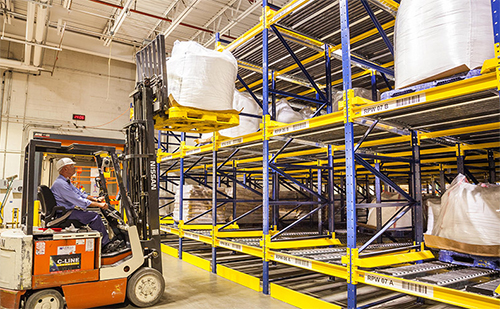
Pallet flow systems are best when movement—not storage—is the primary constraint. In most operations, that threshold starts around 15 pallet moves per SKU per day and becomes compelling above 20-25 moves per SKU per day. Because pallet flow reduces forklift travel and handling frequency from 2.5 touches per pallet to 1 to 1.5 touches, it triggers consistent, repetitive movement other rack systems cannot match.
While pallet flow can increase storage capacity by 60-80%, its real advantage emerges when depth, volume, and throughput align.
Density is a compelling pallet flow factor, but depends on your inventory structure
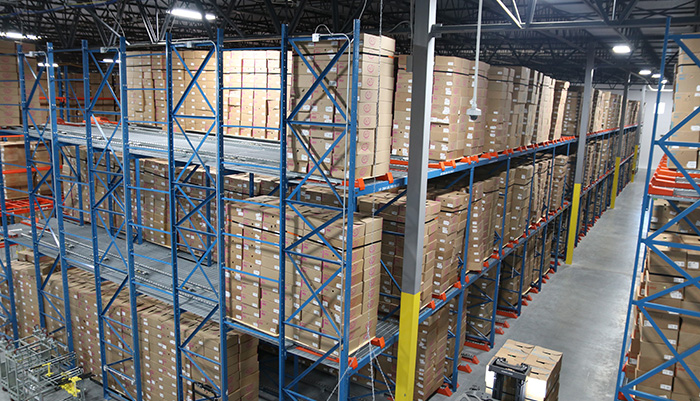
Pallet flow delivers density—typically 60-80% more than selective—while it enhances throughput. Instead of trading access for space, it maintains continuous flow through deep lanes while preserving FIFO.
- Selective rack works well for high SKU counts at the cost of larger footprints and more aisle space
- Push-back improves density by allowing pallets to be stored several positions deep, often increasing capacity by 40-60%. It does not allow depth comparable to flow, and dictates a LIFO operation
- Drive-in rack increases LIFO density with lane depths comparable to pallet flow. The tradeoff is reduced selectivity, slower pallet access and increased handling complexity