









Your shopping cart is currently empty.
Pallet Rack: Frequently Asked Questions
Let's get your rack project right
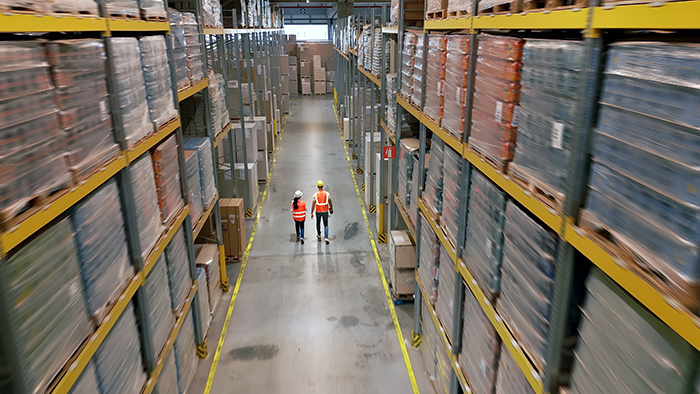
Cisco-Eagle provides pallet rack systems that mesh with your equipment, business goals and facility. Read below for details on pallet rack systems and how we help customers find optimal solutions. You can find more pallet rack analysis and in-depth help on our blog and pallet rack buying guide
Cisco-Eagle’s approach to pallet rack systems
What is Cisco-Eagle’s experience as a rack provider?
Cisco-Eagle has a long and in-depth history of providing pallet rack solutions, going back into the 1950s. This long-term experience helps us provide faster, better solutions that meet your business goals. Our teams are certified, trained and experienced rack professionals armed with the best tools, dedicated inventory and partnerships with premier rack manufacturers.
How does Cisco-Eagle approach pallet rack projects?
We believe in a consultative approach that helps you find the optimial solution in terms of function, long-term durability, cost and process improvement. Racking should not be seen as a simple cost. Correctly specified and installed, it defines your storage strategy and helps you become more agile and competitive.
Does Cisco-Eagle provide on-site consultations and plant evaluation?
Yes. Our teams can help you lay out your system in detail. We deploy specialized tools and dedicated processes that help you define your space and how to optimize it. We have visited thousands of sites and believe it is the best way to ensure a great outcome.
How quickly can Cisco-Eagle quote rack projects?
We’re built for responsiveness with dedicated teams in sales and systems integration who can help you get the information you need quickly, but correctly. We want to be sure provide the proposal you need in a timely manner, with all relevant information and in a form that helps you move your project forward. We also provide self-service tools unique to Cisco-Eagle for simpler projects. We believe in speed and thouroughness.
Self-service tools
- You can purchase many selective tubular racks, structural selective racks, a selection of seismic racks and rack accessories directly from our website if you know your needs and application well enough to do so. We can consult with you on that purchase directly through web meetings, phone calls or online chats.
- You can also use our tools to create a quote online, often including shipping in many circumstances for simple selective applications. To build a standard products quote, click any product and select "Build a Quote." You can build a list of products and submit them for assistance.
- Our selective rack estimator provides ballpark estimates and sketches for simpler, selective rack projects.
Proposals and quotes
- Range of magnitude—or ballpark—proposals can be generated in less than 72 hours for most pallet rack applications.
- Simple selective racks projects can be quoted quickly, depending on quantities, application needs, and available information. This can be in just a day or a few days—or less—depending on these factors.
- Firm quotes, assuming all information is available, take 1-2 weeks including approval drawings and detailed specifications
- Complex projects that include large scale installations can extend the lead time for proposals.
- Dynamic racks (pushback, drive-in, pallet shuttles, pallet flow or pick module integrations require extensive information gathering and design for firm quotes. Complexity and atypical projects may take longer.
What information does Cisco-Eagle need to get started on a pallet rack project?
This depends on the type of project. Building out a few bays of selective racks is less complex than dynamic rack projects.
Cisco-Eagle typically begins with details such as pallet size, load weight, storage capacity goals, ceiling height, and material handling equipment. These details help ensure the rack system fits the application.
Size, scale, environment and scale also plays into the needed information.
Does Cisco-Eagle offer used pallet rack?
No. Cisco-Eagle helps clients with new rack applications.
- 10 Tips: How to Protect Yourself from the Hidden Costs of Used Racks
- Pallet Rack Safety: Preventable Risks
Does Cisco-Eagle help with pallet rack layout and planning?
Yes. Cisco-Eagle provides support with pallet rack layout planning to help align storage systems with space constraints, aisle requirements, and handling equipment.
How does Cisco-Eagle help determine the right pallet rack system?
Our teams evaluate factors such as inventory flow, access needs, and storage density. Based on these considerations, different pallet rack systems may be recommended.
What is the lead time for pallet rack?
Lead times vary, but here are some general guidelines:
| Rack type | Lead time | (Estimated lead times vary based on many factors) |
|---|---|---|
| Selective racking | 24 hours to 6 weeks |
|
| Drive-in systems | 6–10 weeks |
|
| Pushback systems | 8–12 weeks |
|
| Pallet flow | 10–16+ weeks |
|
Other pallet handling systems, such as pallet shuttles and AS/RS, have varying lead times that can be extended. These systems have lead times measured in months.
Lead times for any pallet rack system can be affected by:
- Project size and component quantity
- Steel availability
- Custom finishes or coatings
- Seismic or local/national code requirements
- Current manufacturing capacity
- transportation and logistics conditions
- Trade policies, supply chain issues and material availability
Due to these factors, lead time ranges should be framed as general expectations, not guarantees. Once projects are approved, we work with you to establish and maintain project implementation schedules.
How does Cisco-Eagle address pallet rack safety?
Safety is addressed by aligning system selection and use with published load capacities, installation guidelines, and industry best practices, including standards referenced by RMI.
We have dedicated safety professionals in place that help us operate safer and comply with customers’ safety groups.
What happens after a pallet rack system is selected?
After a system is selected, Cisco-Eagle supports order coordination and provides documentation related to installation and system use. Proper installation and adherence to guidelines are important for long-term performance.
Can Cisco-Eagle support future changes or expansion?
Pallet rack systems allow for future adjustments or expansion. Any changes should be reviewed to confirm they remain within rated capacities and applicable safety standards.
How does Cisco-Eagle differ from forklift dealers?
For your convenience, you can purchase standard racking directly from our website, but we are a comprensive provider with deep expertise.
Most forklift dealers consider racks an allied product—a sideline to the core business of selling, servicing and maintenance of forklift fleets. Pallet rack is a core business for us. Cisco-Eagle is focused solely on your warehouse layout, processes, efficiency, and safety and the ways those goals can be reached with good pallet rack design and configuration.
We integrate rack storage systems with the rest of the operation. That means seeing the operation from a strategic viewpoint: how does the rack system integrate with your shipping and receiving operation? How does it work with the production side? Would a pick module make sense for your space requirements? Where does your rack system interface with other storage or product movement systems?
We're well-versed and have installed hundreds of dynamic rack systems (pushback, flow, drive-in, etc), which requires specialized expertise. We routinely provide high-level design and specification service with teams across the United States who can design and install the right rack system for you. Our design services are internal, not outsourced to manufacturers.
Definitions and general questions
Pallet rack stores palletized or other unit load or bulk products, such as drums, bales, dies and containers, in warehouses, manufacturing facilities, commercial operations and distribution centers. It generally consists of upright frames and horizontal beams that create storage levels accessed by forklifts. Some dynamic rack systems may utilize more advanced components—rails, rollers, or carts within the rack system.
What can I store on pallet rack?
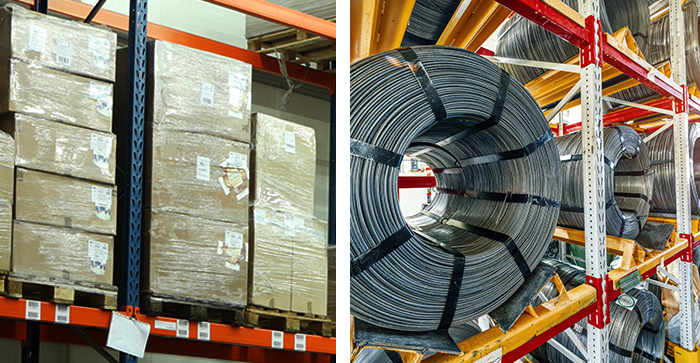
Pallet racks are extremely versatile, and can be used to store a wide variety of loads. The list below includes common loads, but many others are possible.
- Palletized cartons or cases (boxes of finished goods or components stacked on standard pallets)
- Unitized consumer goods (retail-ready products such as food, beverages, paper goods, or household items palletized for distribution)
- Bulk packaged materials (bagged or boxed goods)
- Drums and barrels (often palletized or stored with drum supports)
- Return or reserve inventory or buffer storage (palletized goods held in reserve storage or staged for redistribution) More information: How to Design Storage Buffers
- Palletized building materials (e.g., lumber, drywall, tile)
- Manufactured parts and assemblies (automotive parts, machinery components, or fabricated items palletized for storage or staging. Most pharmaceuticals storage standards require a floor-level beam for safe and hygeinic storage)
- Metal products (e.g., sheets, bars, fabricated components)
- Food and beverage products (dry, refrigerated, or frozen environments. Food applications typically require floor level beams rather than floor storage)
- Pharmaceutical and medical supplies (palletized cartons of medical products, devices, or packaged pharmaceuticals.)
- Paper products (cartons, bundled goods or rolls with proper support)
- Raw materials for manufacturing (palletized inputs used in manufacturing, such as metals, plastics, rubber products, or packaged chemicals)
Read more from our blog:
Pallet Rack Storage Ideas for Difficult Loads and Situations
Pallet Rack Load Distribution Guide
A Guide To Pallet Rack Load Types
What types of pallet rack does Cisco-Eagle offer?
Cisco-Eagle provides all types of pallet rack systems, including selective pallet rack, drive-in rack, pushback rack, pallet flow rack, pallet shuttle systems, automation support structures, pick modules and other specialized configurations.
Each type supports different storage densities, access needs, and inventory rotation methods. Read below for a brief explanation of major pallet rack storage options:
What is selective pallet rack?
Selective pallet rack is the most common type of pallet rack. It provides direct access to every pallet and is well suited for operations that store a wide variety of products with moderate storage density requirements. Selective racks are comprised of horizontal beams and upright frames, and let you access every pallet at all times.
More selective rack resources
- Selective Rack Configuration Tool
- Configuring Selective Racks
- Structural vs. Roll-Form Pallet Selective Racks
- Pallet Rack Clearances: Lateral, Vertical and Building Structures
What is drive-in rack?
Drive-in pallet rack is a high-density storage system where forklifts drive into the rack structure to place and retrieve pallets. It is commonly used for storing large quantities of similar products and typically follows a last-in, first-out (LIFO) inventory method.
Read more
Tips for Better Drive-In Rack Specifications, Operations and Safety
High Density Pallet Storage: Comparing Pushback vs. Drive-In
What is pushback rack?
Pushback pallet rack is a high-density system that stores pallets on nested carts or rollers. When a new pallet is loaded, it pushes the previous pallet back. Multiple pallets can be stored per lane while maintaining aisle access from one side.
What is pallet flow rack?
Pallet flow rack is a gravity-based storage system that uses rollers or wheels to move pallets from the loading side to the picking side. It is commonly used for first-in, first-out (FIFO) inventory rotation and high-throughput operations.
What are pallet shuttle systems?
Pallet shuttle systems use a powered shuttle device to move pallets within deep rack lanes. Forklifts load pallets at the face of the rack, and the shuttle positions them within the lane, increasing storage density while reducing forklift travel inside the rack.
- E4SHUTTLE 4-Way Pallet Shuttle AS/RS
- High-Density Pallet Shuttle Systems
- Pallet Shuttles vs. Dynamic Racks
While the right rack system is a complex question, the design choice often comes down to a balance of selectivity and storage density. Read our guide for detailed information.
How do I choose the right pallet rack system?
Choosing a pallet rack system depends on factors such as pallet size, load weight, inventory rotation, available space, and material handling equipment. Cisco-Eagle provides resources and support to help evaluate these factors and identify an appropriate solution. We’ll help you find the right rack type based on your needs.
What information is needed to specify pallet rack?
Information typically needed includes pallet dimensions, load weights, desired storage capacity, clear ceiling height, facility factors and the type of forklifts or pallet handling equipment used. This information helps ensure the rack system is appropriate for the application. This is also dependent on the type of rack being specified. Understanding your load profiles, access needs, needed throughput and business case is often required to optimize your rack system solution.
Can pallet rack be reconfigured or expanded?
Many pallet rack systems are modular and can be reconfigured or expanded as storage needs change. Any changes should be reviewed to confirm they remain within rated capacities and applicable safety guidelines.
Pallet rack safety
What is Cisco-Eagle’s stance on rack safety?
Cisco-Eagle pallet rack systems are designed to be used in accordance with published load capacities, installation instructions, and applicable safety standards. Safety throughout the process—from design to procurement to installation to everyday use—are part of our process for rack safety. We have been an ISNetworld member since 2009, which allows us to keep up to date with the latest safety standards and ensure our customers that we are updated on their safety requirements.
What safety standards apply to pallet rack systems?
Pallet rack safety is guided by industry standards and best practices published by the Rack Manufacturers Institute (RMI). These standards address rack design, installation, loading, inspection and maintenance.
Fire safety, local compliance and other issues are also considered in the process of rack system design.
Why are pallet rack load capacity labels important?
Load capacity labels identify the maximum allowable weight for each rack bay and level. RMI best practices recommend visible capacity signage to help prevent overloading and reduce the risk of rack damage or failure.
Does pallet rack require regular inspection?
OSHA does not have a specific inspection requirement for U.S. based rack systems, but some countries do require this. Regular inspection is a recommended best practice to identify damage such as bent uprights, missing hardware, or overloaded components. RMI guidance emphasizes inspections as part of an effective rack safety program.
What are OSHA’s standard for pallet racks?
OSHA does not have any specific pallet rack standards. Racks tend to fall under the General Duty Clause. ANSI and MHI have some published standards. Some relevant OSHA industry standards may include: 29 CFR 1910.176(b) for storage of materials and 29 CFR 1910.178 for powered industrial trucks. OSHA expects pallet rack systems to be safe, properly maintained, and used as intended—even though there is no pallet-rack-specific OSHA regulation.
Who should install pallet rack?
Pallet rack should be installed by trained and qualified personnel. Proper installation helps ensure the rack system performs as designed and meets safety guidelines.
What are some unsafe pallet rack practices?
- Overloading the rack (exceeding rated capacity)
- Ignoring load capacity labels (missing, unreadable, or not followed)
- Using damaged rack components (bent uprights, damaged beams, missing hardware)
- Improper forklift operation near racks (impacts, pushing pallets into uprights)
- Uneven or unstable pallet loads (poorly wrapped, broken, or off-center pallets)
- Storing pallets incorrectly (not supported properly on beams or decking)
- Modifying racks without review (changing beam levels or adding accessories without verifying ratings)
- Lack of regular inspections (damage goes unnoticed and worsens over time)
- Using pallet racks for unintended purposes (climbing, hanging items, improper storage)
- Inadequate aisle clearance (increases risk of collisions and rack damage)
- Allowing unsafe employee behavior (such as climbing, unsafe ladder use or walking beneath rack structures)
- Clutter in rack aisles (increases the chances or a forklift striking a rack)
Where can I learn more about pallet rack safety?
Cisco-Eagle provides pallet rack educational resources, and industry organizations such as RMI publish guidance related to inspections, signage, and safe rack use.