




Insights March 2026: Strategic Planning for Industrial Operations
Why the pace of change is faster than ever
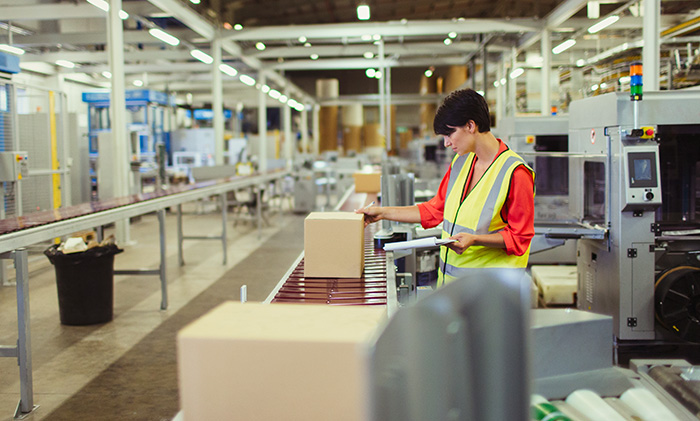
While the landscape has never been less certain, warehousing and manufacturing professionals must still plan for 2026 and beyond. This post rounds up authorities on what to expect the next few years and how experts advise you to factor in these trends in trade, technology, artificial intelligence and more.
2026 Manufacturing Policy Risks & Opportunities (Grant Thornton)
Federal policy in 2026 continues to shift in meaningful ways for warehouse and manufacturing. A recent Grant Thornton analysis highlights that trade uncertainty, changing tariff regimes, tax incentives, regulatory rollbacks, permit reform, energy constraints, and workforce issues are among the forces reshaping strategic planning this year. Court rulings and political maneuvering will continue to shift trade policies throughout 2026. Understanding these dynamics will help you be proactive. Grant Thornton offers a map for the year’s potential changes.
U.S. manufacturing policies have been, to say the least, a roller coaster the last few years. Don’t count on that ride slowing. Agility in your strategic planning, facility design and supply chains are key.
Key takeaways
- Ongoing ambiguity in trade policy is a central risk heading into 2026. With the USMCA review on the horizon and shifting tariff levels between major trading partners, you should factor potential cost and sourcing disruptions into your plans. The February ruling on IEEPA tariffs is only the start of this process. This may ease tariff pressures in some cases, but the volatility is here to stay.
- It’s more important than ever to understand tax policies and incentives. Tax incentives and federal policy focused on competitiveness may create opportunities. This means you should evaluate and re-evaluate the way these policies intersect with your investment and workforce plans. What would help you achieve the most benefit from these policies, and what might the environment look like through 2o26 and into 2027?
- When policies are as dynamic as federal regulations tend to be, the impact on industry can be substantial. In some areas, regulatory requirements are being relaxed, which could reduce compliance costs. At the same time, new or reinterpreted regulations can show up any day. Staying adaptable and maintaining strong compliance foundations will be key. This is an issue where choices made today can resonate for years, so it’s worth your time in strategic planning.
- If you’ve permitted a new facility, you know how complex and difficult that process is. Streamline permitting processes; efforts focused on energy and facility development could accelerate warehouse and manufacturing expansions. The Standardizing Permitting and Expediting Economic Development (SPEED) Act is one of the few bipartisan federal efforts on the docket in 2026. If enacted, it could relieve pressure for these vital expansions.
- To put a new twist on an old adage, “it’s the workforce, stupid” applies. Workforce availability (including factors tied to immigration policy and national labor trends) has been the top concern for WERC and other industry surveys for many years. Everyone is feeling the labor pool contractions. While you can’t do much to swell the pool, you can plan for labor alternatives, training programs, and automation partnerships that will help mitigate the challenges.
More perspectives on the 2026 industrial environment
Policy shifts worth monitoring
The Council on Foreign Relations highlights policy shifts worth monitoring, including how evolving U.S. tariff strategies, renegotiations of longstanding trade agreements, and the impacts of tariff relief on consumer affordability. These developments have a good chance of affecting your competitiveness, supply chains, and strategic planning efforts.
Trade policy isn’t just a policy issue. It’s a facility planning issue
In “How tariffs and trade policies reshape industrial warehouse demand in the U.S.,” Agora Real Estate discusses the impact of trade policies on where and how they directly affect how companies think about warehouse space. You should rethink where and how you store inventory. Strategies like using Foreign Trade Zones (FTZs) or bonded warehouses can help you delay or reduce duty payments. Where you locate distribution space, how much inventory you carry, and how flexible your operation is can all influence how well you manage tariff risk.
Key manufacturing trends for 2026
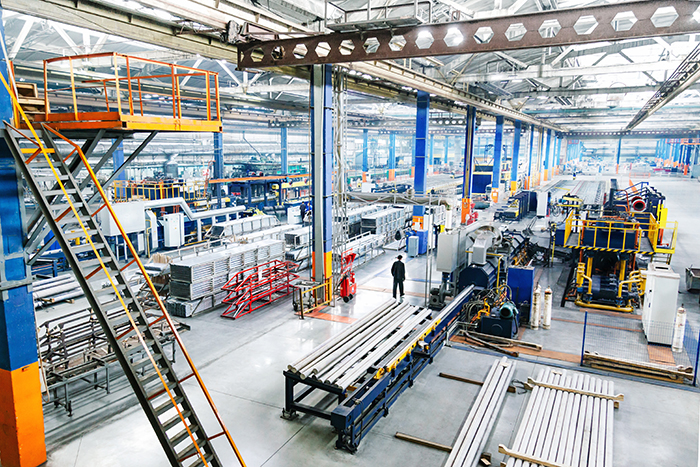
According to the National Association of Manufacturers (PDF download), manufacturers are moving toward systems that can sense conditions, respond in real time, and optimize processes with minimal human intervention. NAM’s 2026 trends report outlines how automation and digital tools are reshaping manufacturing. We should be moving toward smarter operations, AI-driven decisions, and more connected supply chains. The key trends NAM outlines are:
- Autonomous & Adaptive Operations: If you’re thinking about where manufacturing is headed in 2026, one of the biggest shifts is towards machines that think and act for themselves. For you, that means greater efficiency, fewer manual adjustments, and a shift toward managing exceptions, not routine tasks.
- AI-Driven Decision Making: Artificial intelligence is moving from pilot projects into core operations, powering predictive maintenance, quality control, and production optimization. Data must be actionable, not just informative.
- Workforce Transformation: As automation expands and the labor pool continues to contract, job roles must evolve. You’ll likely need people skilled in analytics, systems oversight, and digital tools.
- Organizational Redesign: Cross-functional collaboration and faster decision cycles are becoming essential to get full value from automation investments.
- Digitally Connected Supply Chains: Real-time visibility across suppliers, production, and distribution is becoming standard. More connected networks help you respond faster to disruptions and adjust inventory or production plans quickly.
- Operational Resilience: Automation is increasingly tied to risk management. Advanced analytics and scenario modeling tools allow you to plan for trade shifts, logistics delays, or demand volatility with more confidence.
- Cybersecurity for Smart Operations: As facilities become more connected, protecting systems from cyber threats becomes critical.
- Performance-Focused Technology Investment: Automation investments are increasingly evaluated by measurable ROI — throughput gains, labor efficiency, uptime, and accuracy. These factors should have always been the focus, but are more critical than ever today.
Quick hits
- OH&S Magazine explores a trend in construction that also applies to warehousing in “Why Most Construction Accidents Happen at the End of the Shift.” Fatigue, distractions and shifting conditions affect all workers. The article calls this the “invisible risk.”
- “Cold storage trends for 2026 and what they mean” from Steel King delves into the effects of racking design on cold storage projects
- In “The Golden Zone Is a Moving Target: Slotting for High-SKU Warehouses,” Cisco-Eagle discusses the value of geography for product location in a picking operation.
Scott Stone is Cisco-Eagle's Vice President of Marketing with 35 years of experience in material handling, warehousing and industrial operations. His work is published in multiple industry journals an websites on a variety of warehousing topics. He writes about automation, warehousing, safety, manufacturing and other areas of concern for industrial operations and those who operate them.