




Why Static Walls are a Data Center’s Biggest Risk
Keep the airflow moving and the compute secure with wire mesh walls
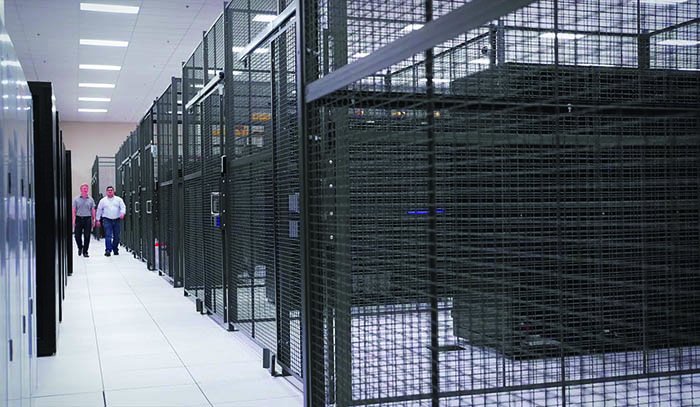
In the data center world, everyone obsesses over virtual agility. Millions are spent on scalable architectures, software-defined networking, and high-spec power strips. But for some reason, when it is time to carve out the physical floor, people revert to nostalgic construction methods.
If you are running a facility, you know the drill: the only thing you can count on is that things will change. You’ll get a request for more space, more power, or more isolation. If your physical footprint is built with permanent solutions like drywall or heavy sheet metal, then you are building future bottlenecks.
The Conflict of the Permanent Wall
When a tenant needs a high-security zone for HIPAA or SOC2 compliance, the first instinct is to call a general contractor. But once those studs and drywall go up, you’ve introduced two major operational headaches.
Airflow is critical
Data centers are precision environments where every cubic foot of air is accounted for. Solid walls are obstacles that encourage problems, such as:
- Heat Pockets: Solid barriers create stagnant zones
- Containment Issues: They disrupt the hot-aisle/cold-aisle strategies you’ve spent a fortune to optimize
- Energy Waste: When you choke off the air, your cooling system works twice as hard, driving up costs and equipment wear
Having a walled system that provides the critical airflow needed is a key element! Think “freedom of movement” for the air within your data center lol.
Don’t let dust bunnies roam
You cannot sand drywall or perform “hot work” in a live data hall without putting hardware at risk. Some of those include:
- Abrasive Debris: Drywall dust is a slow war against server longevity
- Conductivity: Micro-particles can cause shorts in high-density racks
- Filtration Strain: It puts an unnecessary load on your HVAC system
One way to avoid these future conflicts is by using wire for your walls. Modular wire cages offer data centers flexibility and strength in a sturdy package. You get the airflow needed, and if alterations (be it movement or temporary replacement) are needed, there is no dust to deal with!
See-through makes auditing easier
Security is a game of visibility. When an auditor walks your floor, they want to see compliance without having to dig for it.
Visual verification
With a 2″ x 1″ mesh opening, a security cage gives you immediate proof. An auditor can verify equipment tags, locks, and cable management from the aisle. This means fewer “touches” and higher security for the tenant.
The mesh also lets your fire suppression and HVAC systems do their jobs. You don’t have to drop new sprinkler heads or reroute ductwork every time a new cage goes up. The facility breathes as one unit.
Defining sovereignty in shared space
Whether building for internal departments or external tenants, the goal is sovereignty. Each entity needs to know its hardware is physically isolated. Having wire partitions in your data center allows this and provides important peace of mind for your operations team.
Not to mention, you get increased understanding and collaboration.
Anti-Tamper engineering
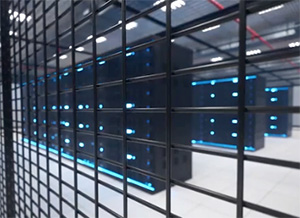
Modular wire partitions are engineered perimeters with features every datacenter manager will crave:
- Internal Hardware: On high-quality systems, all bolts and nuts are on the inside
- Secure Fastening: If someone shows up with a wrench on the outside, they have nowhere to start
In high-tier facilities, security must go beyond eye level. This is where “plenum” security comes in. By running mesh panels below the raised floor tiles and above the drop ceiling, you eliminate the risk of someone crawling under a wall through the utility gaps.
Scalability: The ability to adapt
The most expensive word in running a datacenter is “No.” Using modular partitions changes the game because these systems are essentially a structural Lego set. The adaptability you get shows up in many places, like:
- Speed: If a tenant needs to expand, you can strike a wall and move it three feet in a single afternoon.
- No Debris: You get a new layout without a speck of dust.
- Adaptive Access: You can swap a standard swing door for a biometric sliding gate without starting from scratch.
“Centering” on the future!
Wire partitions should not be an afterthought. They are a strategic asset.
Unlike drywall, a modular wire system is a tangible asset that doesn’t turn into a pile of debris when you move it. If you reconfigure a hall, the panels you bought three years ago still fit the ones you buy today.
The best facility plans are never finished; they are designed to be edited. By prioritizing airflow and modularity, you ensure the facility stays viable, no matter what the next hardware refresh looks like.
Download Our Industrial Security Guide
Every facility fights a constant battle to keep its equipment and product safe and secure from theft. You want to maintain access for high-value items while also limiting availability only to those who really need to handle them. Our new guide to industrial security is here to help you find the right security options to fit your operations.
Download the guide today
Evan Fleishacker is a Marketing Strategist at Cisco-Eagle. You can find him on LinkedIn at linkedin.com/in/evanf