President Obama’s recent State of the Union address focused on manufacturing in the United States – which everyone, no matter their political persuasion, can agree is a vital part of our economy. Countries that don’t make things aren’t world powers, period.
And the numbers, on the surface, can look dire. According to Forbes, 22 million manufacturing jobs were lost globally between 1995 and 2002. The U.S. has lost hundreds of thousands of manufacturing jobs in that timeframe.
The common belief is that these jobs were palletized and shipped east to China or south to Mexico. That has happened (we’ve seen it in our client base more than once) but it’s only part of the truth. The reality is more complicated, and may help us to understand why manufacturing output has increased in the U.S. even while jobs have been reduced. Manufacturing output didn’t just grow; it rocketed 30% since 1995. China – the supposed vampire of manufacturing employment – lost a whopping 16 million jobs in the sector.
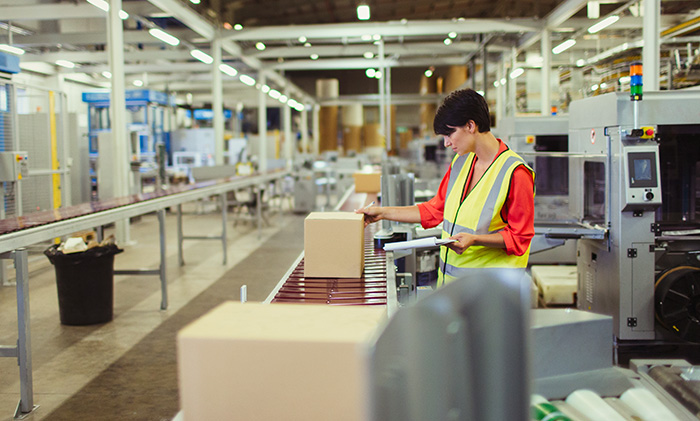
In a word, the “culprit” (if you want to call it that) is automation. Robotics has become less expensive and significantly more capable – and continues to improve.
We see two kinds of operations that have shown interest in, or implemented an AisleCop® forklift safety gate system. The first are those companies who have defined traffic plans and are looking to prevent possible accidents in high-risk, limited-visibility, or heavy-traffic aisles. They foresee potential accidents and are taking measures to prevent them. The second kind are companies who have had an incident, or a near-miss.
In both cases, the question has been “how can I justify this system?”
Aside from the fact that it could help save a life, or help prevent horrific injuries (the only kind that a forklift-pedestrian accidents seem to produce), AisleCop® can also save money in a variety of ways.
We have created a document, free for download, that you can use if you’re pitching a safety system to your management. It’s a short, but informative read.
Sortation systems in distribution is application driven – typically we are talking about order fulfillment (retail, wave pre-sorting, inbound putaway sorts), shipping (end of line carrier sortation, ship to stores), and returns. Traditional sweep sorters, cross-belt, narrow slat & shoe, or belt sorters are often thought of as “for the big guys” in large operations. SpanTech’s new TranSorter is different, and it’s rolling out at Modex 2012. A sneak peek video below:
The TranSorter is built for hard to sort items, such as fragile items that require different handling. It’s good for ultra-lightweight items, poly bags, etc. It’s scalable, flexible, and affordable due to truly modular design, a world of layout possibilities, and competitive pricing. It can also deploy quickly, with 6-8 week delivery times and a couple days installation time. If you’re planning to attend Modex, check it out.
If you are in the warehousing or material handling industry, you’ll find yourself identifying warehouse and handling equipment in movies or television shows quite often. Many of us have seen, for instance, the NFL graphics of a large distribution system used on Fox network for years. I’ve pointed out Hytrol conveyors in movies to my wife for years, to the point where she says it first when she sees it.
For fun, we have put together a list of the more famous scenes in entertainment history involving material handling equipment, and how it could have been done better.
The American Small Manufacturers Coalition (ASMC) released the results of its 2011 Next Generation Manufacturing Study, identifying key trends affecting the industry and steps U.S. manufacturers can take now to be successful in the next generation. Some of the findings are fairly predictable, while others may surprise you. In particular, you have to consider people at all levels. Are your key players likely to retire or take other positions over the next decade or so? How can you prevent that? What can you do to further develop them?
If you’re planning on attending Pack Expo 2011 next week (September 26-28), come see us at booth #S6522. We’ll be demonstrating the AisleCop™ warehouse pedestrian safety system and a full range of automation and material handling solutions. Come by and meet us!
We are often asked who should “run point” when a client determines it is time to either upgrade an existing facility, or consider a new location to meet their supply chain requirements. How might they move forward with professionals who will provide a solution without a product bias, or a pre-determined template. Read the rest of this entry »
Cisco-Eagle has partnered with Seegrid to offer automated, unmanned industrial pallet and tow trucks as part of our continuing focus on automated storage systems.
A federal tax credit that could allow forklift users to recoup 50 cents of every gallon of propane purchased runs out August 1, 2011. If you run forklifts on propane, it’s nearly a no-brainer that your company should apply for this credit. To get in, you must have submitted your paperwork by the first of August. The credit is part of the Tax Relief, Unemployment Insurance Authorization, and Job Creation Act of 2010. Propane is part of the alternative fuels classification, which also includes natural gas, bio-diesel, and ethanol.
After the deadline, the tax credit reverts to 30%. As always, see your tax professionals before undertaking any decisions based on this information.