Sortation systems in distribution is application driven – typically we are talking about order fulfillment (retail, wave pre-sorting, inbound putaway sorts), shipping (end of line carrier sortation, ship to stores), and returns. Traditional sweep sorters, cross-belt, narrow slat & shoe, or belt sorters are often thought of as “for the big guys” in large operations. SpanTech’s new TranSorter is different, and it’s rolling out at Modex 2012. A sneak peek video below:
The TranSorter is built for hard to sort items, such as fragile items that require different handling. It’s good for ultra-lightweight items, poly bags, etc. It’s scalable, flexible, and affordable due to truly modular design, a world of layout possibilities, and competitive pricing. It can also deploy quickly, with 6-8 week delivery times and a couple days installation time. If you’re planning to attend Modex, check it out.
The end of a manufacturing or distribution line is where the rubber meets the road for many operations. It’s potentially the last place where you have direct control of your product before it ships to retailers or direct customers. It’s where you can add a lot of value…or spoil a lot of value. The end of the line in many ways is more important to your company’s image as all its public relations, its websites, its brochures. It is often where your reputation can be made.
At the end of line, we package, we palletize, we stretch-wrap, we inspect, we ship. And we have the chance to add value.
Especially as the economic recovery continues, it’s important to control costs in your operation. What are some warehousing cost-cutting methods you can employ that don’t require extensive investment or re-tooling? Most of the costs of warehousing operations fall into the following categories:
In this operation, differently-sized beer cases are conveyed to the robot to fulfill a specific order. Since the cases vary by width, length, and height, their dimensional information is sent to the robot by the WMS (warehouse management system). The robot utilizes mixed-load palletizing software to determine the best pattern to build a pallet with the available products, achieving high density and stack stability with rapid speed.
The Integrated Systems and Controls (ISC) Council of Material Handling Industry of America has released a new report titled An Evaluation of Operational Performance in Warehousing, Distribution and Manufacturing., and it has some interesting information for those who operate warehouses, distribution centers, manufacturing, and commercial operations.
The key thing? You’re still being asked to squeeze more value from your operation – and you need to be able to do it with fewer resources.
When you are moving items such as cartons, bins, or components through a facility, several methods are available. Most of the time the choice is between non-powered carts & trucks or conveyors, whether power or gravity. (If you’re moving pallets, there are other methods and issues). Generally, conveyors deliver a less manual, safer operation with added efficiency across the board. Products are moved faster and fewer employees are required to accomplish the same tasks. Conveyors minimize fatigue and reduce potential manual lifting injuries. This improved handling has the potential to reduce worker compensation claims and expenses
But when do you make the leap from a manual, cart-driven system to a conveyor transport system?
A few months ago, we posted a Guide to Vertical Reciprocating Conveyors (you might find it useful if you’re looking at any application that moves a load up and down at least one level integrated with a shaft, mezzanine or other are). That guide includes the following questions, which you should be able to answer as you move ahead with your project.
A quick note: Cisco-Eagle is a sponsor of the University of Arkansas RFID Research center. We’ve been involved with the center since its 2005 inception. I’ve visited the center a number of times, and have seen the innovative work that’s being done.
The study confirms that RFID can have a significant positive effect on retail inventory accuracy. For players like Wal-Mart, this means millions of dollars in savings. A preliminary analysis demonstrated that an automated, RFID-enabled inventory system improved accuracy by about 13% in test stores compared to control stores.
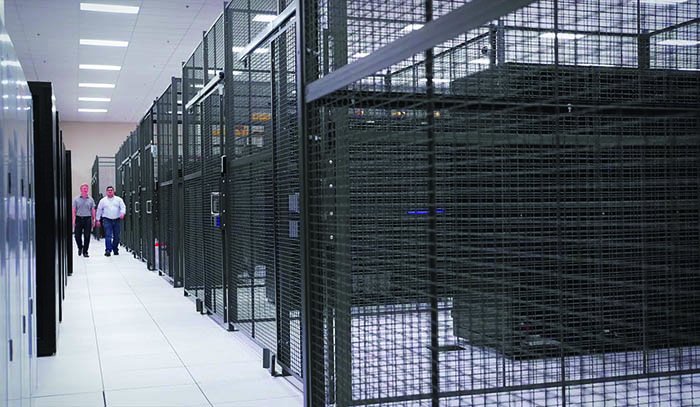
We’re preparing to release the latest Cisco-Eagle publication: “10 Ways to use Material Handling to Increase Security.” It’s common sense that the way you store, handle, segment, and track inventory has a great deal to do with security. Material handling is important because it’s a persistent, passive enhancement to regular security procedures and equipment. Material handling certainly doesn’t replace guards, careful hiring, a culture of honesty, and camera systems, but it can make all of them better.
Store the most valuable, highest risk inventory & tools in secure areas
Secure palletized loads, even when stored in racks
Tightly control dock door access
Secure valuable inventory as early as possible after receiving it, and prior to shipment
Enhance security with automated material handling systems
Lay out your plant with security considerations in mind
Utilize cycle counts, irregular monitoring to detect & deter pilferage
Separate staging areas from loading & shipping docks
Secure inventory “where it sits” during receiving
Erect a barrier between shipping and receiving doors
Sadly, most industrial operations suffer more from employee-based pilferage, since they don’t face shoplifters or other intruders. There is a fully developed industrial security area relating to material handling on our website, with articles, products, specifications, links and more information. Check it out. If you want to receive a copy of the upcoming paper, sign up for Material Handling Tips & Info, our award-winning newsletter. All subscribers will receive a link to the digital version when it publishes.
A recent development in conveyor technology is dynamic zone allocation. Zero and minimum pressure accumulation systems have been around for years, but suffered from variable loads. If you have zones of, say, 24″ and some cartons that are 15″, the smaller cartons have to take up space as if they were the longest load on the system. An animation depicting DZA can be found here.
This results in what amounts to wasted space on the line and slower throughput since the conveyor can handle fewer items simultaneously.
Dynamic zone allocation automatically adjusts the conveyor’s zone length to accommodate the length of the carton being conveyed. Longer cartons are easily and efficiently conveyed in singulation mode, giving you better control of conveyed boxes. Carton throughput is increased, as well as accumulation density and system flexibility. This naturally makes your conveyor system more flexible and more efficient. You can size your zones for the smallest carton in the system and still deal with the largest one. What’s more, longer cartons can be introduced after installation and don’t obsolete your conveyor investment.
Dynamic zone allocation is part of Hytrol’s EZLogic Gen 3. If you need the kind of product density and conveying flexibility it offers, it’s a worthwhile option.