




To Help an Aging Workforce, Your Facility Should Keep Up
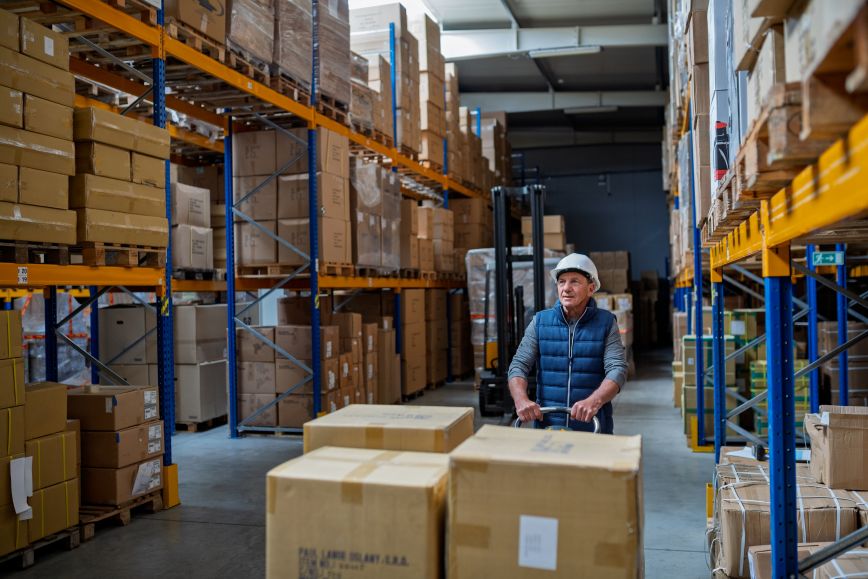
There’s a demographic shift moving through industrial floors right now, and most operations are feeling it before they’ve named it. Experienced employees are staying on the job longer. And the pipeline of new hires coming in behind them isn’t keeping pace.
The takeaway is simple: you’re leaning on your most experienced workers more than you used to, and that’s likely to stay true for a while. The good news is that keeping those people healthy, comfortable, and productive is largely a design problem, and design problems have solutions.
What changes as a workforce ages
Aging brings real, normal physical changes. Muscle strength drops off. Recovery from a hard day takes longer. Flexibility, balance, and mobility shift. Eyesight changes in ways that quietly make precision and fine visual work harder.
None of that is a knock on anyone, as it’s biology, and coming for all of us. The key to understand is that most jobs were designed around whoever happened to be doing them and never revisited. A task built for younger workers keeps demanding the same deep bends, long reaches, and heavy lifts from a veteran who’s been doing it well for decades.
In jobs that lean on lifting, reaching, standing, or close visual work, that mismatch is where discomfort and injury start. And recovery times that stretch longer with age are what turn a sore shoulder into a permanent restriction.
Read more: Ergonomics and productivity
Design the work to fit a wide range of abilities
Ergonomics is really just the practice of aligning job demands with human capabilities. When a workplace is built to fit a broad span of ages and abilities, people can contribute fully without trading their health to do it. You don’t need to gut the building to get there, either. The highest-value changes are the ones that take strain off the people who’ve earned the right not to grind themselves down.
A few that matter most for an aging crew
- Adjustable and adaptable workstations:Â Height-adjustable benches, lift tables, and sit-stand options reduce the need to work in awkward postures and help people hold neutral positions throughout the day. The same station can fit a tall worker and a shorter one, a new hire and a 30-year veteran, without anyone compromising.
- Optimized reach and material flow: Bringing parts, tools, and inventory into the optimal reach zone takes the load off the shoulders and lower back. Presenting items at the right height and angle also improves accuracy and cuts fatigue. Think of it as protecting the body and the throughput at the same time.
- Mechanical assists and handling tools:Â Carts, hoists, conveyors, and tool balancers reduce the force it takes to move materials. These tools keep an experienced worker productive even as strength naturally declines, which means they don’t age out of a role they’re otherwise great at.
- Enhanced visual ergonomics: Adjustable lighting, and better screen and part positioning support precision tasks and compensate for age-related vision changes. It’s one of the cheapest ergonomic wins available and one of the most overlooked.
- Better work-rest structure: Breaking up repetition, rotating tasks, and pacing high-exertion work give older employees adequate recovery time and reduce cumulative strain. Designing the day around recovery rather than against it keeps small aches from becoming lasting restrictions.
The improvements matter to the humans and operations
Treating your people well is reason enough, but the numbers back it up. Ergonomic improvements consistently show up as fewer recordable injuries, lower workers’ comp and insurance costs, steadier quality and throughput, lower absenteeism, and better retention, especially among long-tenured employees. In a tight labor market, those add up to the difference between hitting your numbers and falling behind.
But wait, there’s a recruiting benefit hiding in here as well. A floor that’s clearly built around real human needs reads differently to a younger worker deciding whether to take the job. It signals a company that invests in modern tools and isn’t going to break their body before they’re in their 50’s. The same changes that keep your veterans help you attract the people who’ll eventually work alongside them.
Read more: An ergonomic labor strategy
Adapt the work to the worker
Ergonomics doesn’t slow down aging. What it does is remove the barriers that push experienced people off the floor before they’re ready to go. As the workforce keeps getting older, the operations that come out ahead will be the ones that adapt the work to the worker instead of asking the worker to keep adapting to the work.
Download our catalog
At Cisco-Eagle, we pride ourselves on being a single source for your material handling needs with a long history of performance you can rely on. Because we also believe in empowering our customers with detailed information and options, we’re proud to offer the latest version of our company catalog.
Download the catalog today
Evan Fleishacker is a Marketing Strategist at Cisco-Eagle. You can find him on LinkedIn at linkedin.com/in/evanfleishacker