
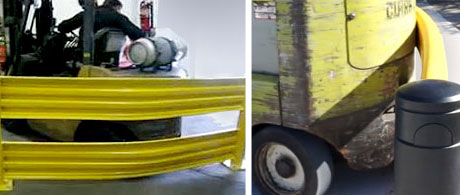
These collisions have done some damage
In both cases, the guard rail has deformed. That’s good (kind of), because both guardrails have done their jobs and protected the people, equipment or facility structures behind them. On the other hand, you can see that the rail systems have been damaged. Let’s see how they match up in form, function and lifetime cost. Typically when you have a forklift barrier, it will eventually be impacted, and those impacts can be direct or indirect, fast or slow, serious or cosmetic. When the impact is direct, fast and damaging, what are the critical differences in rigid and flexible rail systems?
Read the rest of this entry »
Tags: forklift safety, guarding systems, Steel guard rail, Flexible polymer guard rail, traffic control, pedestrian, inventory, structure
Posted in Safety & Ergonomics|
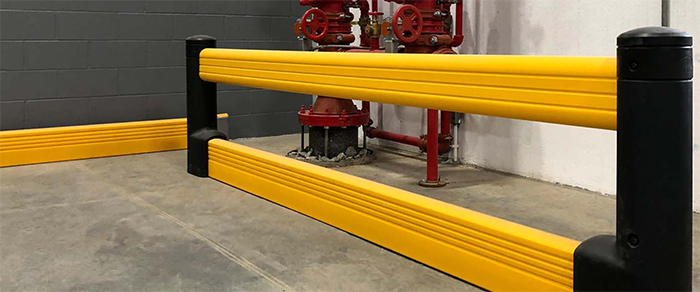
Guardrails are used to separate people, structures, machinery and valuable assets from heavy forklifts weighing more than 10,000 pounds. The requirements for durability and impact resistance are demanding, yet many don’t understand what types of impacts their systems can endure, and under what circumstances. The issue is compounded by the fact that many manufacturers simply don’t provide impact ratings for their guard rails. Some companies fabricate and install home-made railing, which is likely to never have been rated at all.
What can you do to ensure your guard railing system can protect your employees and property the way it’s supposed to?
Read the rest of this entry »
Tags: bollards, traffic management, guard rail systems, facility safety, hand rails
Posted in Safety & Ergonomics|
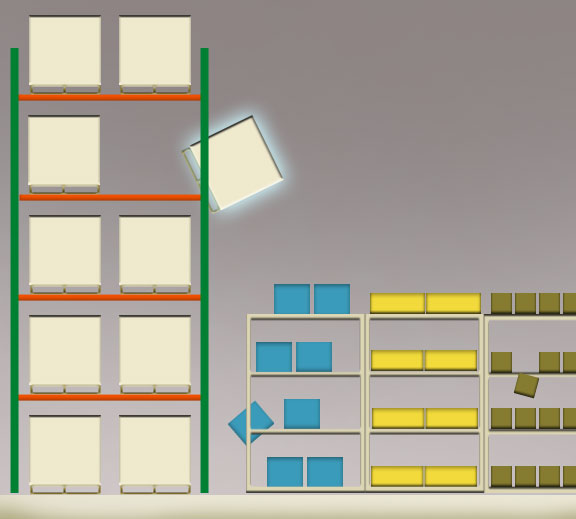
What goes up…
In warehousing and storage operations where inventory is stored high on racks, stacked on floors, slotted into on multi-level shelving, mezzanine deck-overs or on suspended/overhead conveyor as it moves, there is one constant: things will fall. They fall because they’re stacked wrong. They fall because an order picker or a forklift bumps them. Things fall due to seismic activity, machine stops, or silly mistakes. Sometimes it seems like they fall for no reason at all.
What can you do to “stop the drop”?
Read the rest of this entry »
Tags: product damage, conveyor safety, warehouse control, Inventory protection
Posted in Safety & Ergonomics|
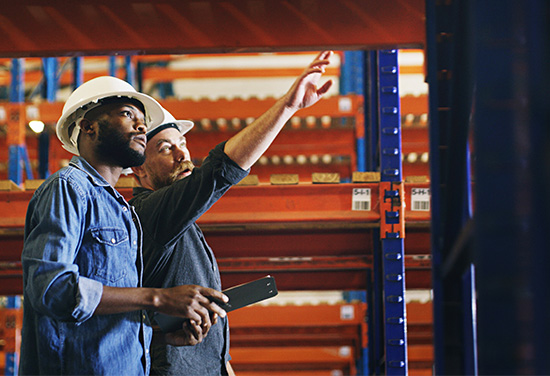
Industrial workplace safety bears repetition and consistent reinforcement
For manufacturing and distribution operations, workplace safety doesn’t just protect workers—it optimizes productivity and helps drive revenue growth. It also helps protect company assets, reduces downtime, and increases morale. What can you do to protect your employees in picking, packing, material handling, assembly, maintenance and similar work? To answer this question, we spoke with leading manufacturers and distributors. Here’s what they had to say: Read the rest of this entry »
Tags: WireCrafters, Hytrol, industrial safety, Unex, ergonomics
Posted in Safety & Ergonomics|
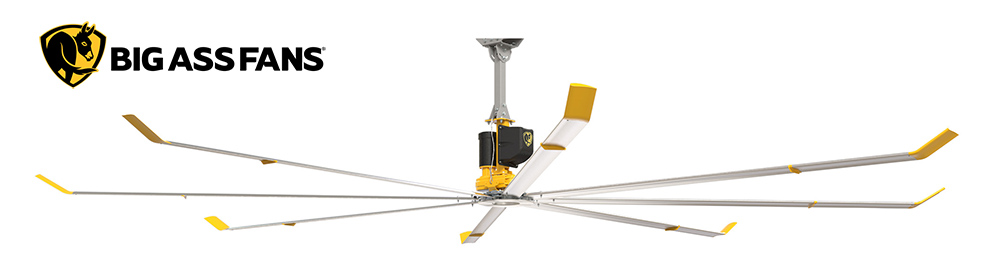
Do areas of your facility require constant temperatures? Are your employees dealing with significant seasonal temperature variations? These situations all require special conditions – often conditions that are hard to control with people and equipment moving in and out all the time. Let’s examine some climate control options outside the world of HVAC equipment.
Read the rest of this entry »
Tags: high volume low speed, high velocity, industrial fan, climate control, air circulation, destratification, ventilation, heating, work environment, cooling, fans, high-speed doors, mesh door, HVLS
Posted in Safety & Ergonomics|
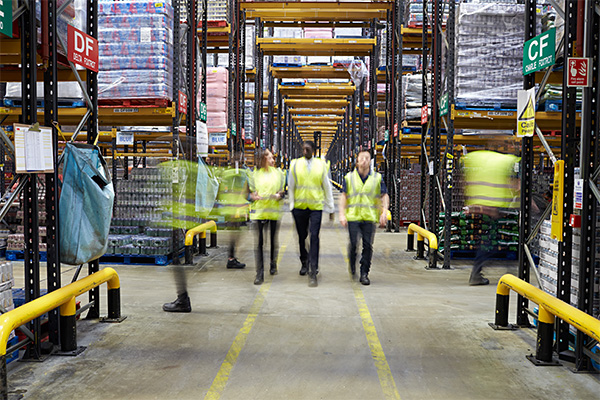
Scene: a typical, busy warehouse
A fulfillment center with row upon row of pallet racks. Eight dock doors occupy one wall of the building, some for receiving, some for shipping. Pick workers work in the rack aisles pushing carts and pallet jacks loaded with picked orders. Other pick workers have empty totes on carts for pulling orders. Fork trucks stock pallet rack and pull bulk stock for large orders. Dock doors are left open much of the time, even when there’s no trailer at the dock.
How many potential safety risks can you envision in this scenario? How do you prevent those from happening?
Read the rest of this entry »
Tags: technology, safety sensors, motion detection, infrared
Posted in Safety & Ergonomics|
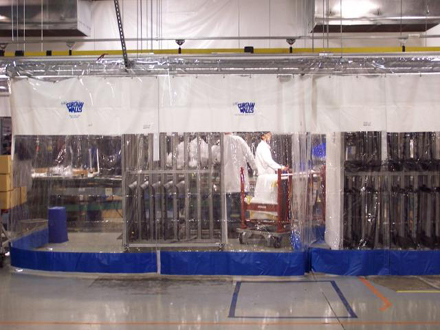
Things get a little messy sometimes in most industrial facilities. Or a lot messy.
Areas where sprays and aerosols are used aren’t friendly to the rest of the operation, but they also need to exist in the same facility. Perhaps thermal zones are needed where there was once plenty of space. Welding stations may be in areas more highly populated with other workers. Amongst all these considerations is also the fluidity of your operations as the company grows and changes. Are permanent solutions (walls) the right answer?
Read the rest of this entry »
Tags: curtain walls, welding screens, acoustic panels, thermal walls, privacy screen, vinyl walls
Posted in Safety & Ergonomics|
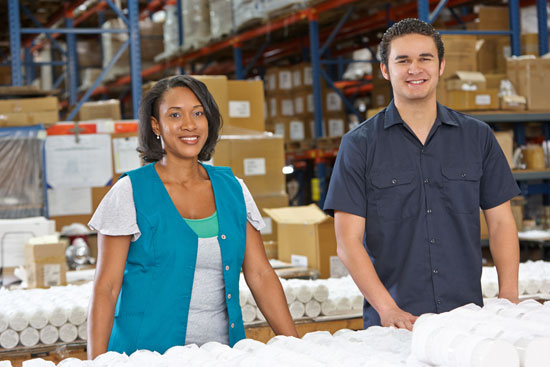
Everyday functions of most warehouses and industrial operations fall within the realm of manual material handling–constant lifting, bending, stretching, reaching, pushing and otherwise manipulating materials by physical force. People are moving cartons, picking orders, reaching for packing materials and performing other tasks. Manual material handling contributes to musculoskeletal disorders, to the tune of more than 500,000 reported annual reported cases of strains and stress in shoulders, backs, arms and legs.
While you can never eliminate it, you can reduce the worst aspects of it. Let’s dive into some ways.
Read the rest of this entry »
Tags: ergonomics, lifting, manual material handling, musculoskeletal, industrial safety
Posted in Safety & Ergonomics|
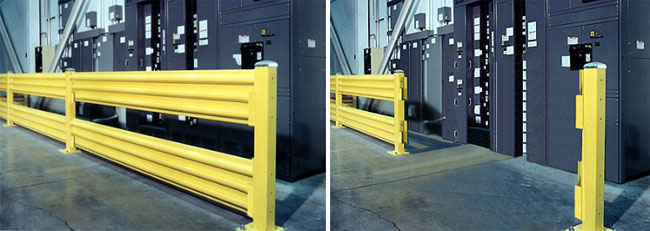
Steel guard rail is one of the best–and most economical–accident prevention tools in a facility’s safety arsenal. It helps keep workers safe from forklift traffic, protects valuable equipment from potential damage, and even guards ends of pallet rack rows. But there may be times when you need forklift or cart access to protected areas (or simply don’t want to step over or around railing). How do you handle those situations? How often are you having to remove your guard rail and then reassemble? There’s a better way available — lift-out rail systems.
Read the rest of this entry »
Tags: Lift-out guard rail, lift-out/drop-in, drop-in, access point, lift-out, guard rail systems
Posted in Safety & Ergonomics|
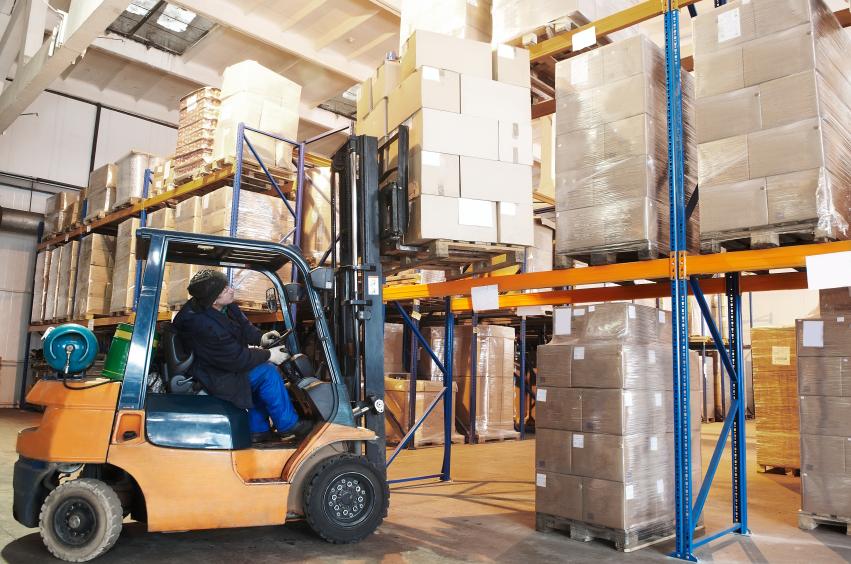
Fork lifts are the mules of the industry, and we expect them to just power up and run when we need them to, but there are some very important safety aspects that should be taken care of before every shift. Safety steps that lengthen the service life of the vehicle, assure the vehicle operates as it should, and helps make it more visible to others working in the same space with the forklift. Read the rest of this entry »
Tags: Safety & Ergonomics, forklift, inspection, check levels, fork truck
Posted in Safety & Ergonomics|
Read our customer reviews