

When I was a kid, on rainy days my friends and I used kitchen chairs, old blankets and lots of clothespins and built our own special space for imaginary adventures. Our rag-tag shelter was temporary, but gave us the sensation of being in our own little world. Frequently, in manufacturing and warehousing facilities, work zones and independent departments need separation from the larger whole for either safety or autonomy purposes, and there are products out there that answer those needs. Products like curtain walls, acoustic walls, thermal barriers and welding screens. Read the rest of this entry »
Curtains and Dividers Help Retain Climate, Protect Products
Tags: vinyl, welding, screen, warehouse space savings, curtain walls, acoustic, barrier, thermal, strip door, plastic
Posted in Safety & Ergonomics|
Prevent Forklifts from Cutting Corners


It’s always dangerous when forklifts and people inhabit the same work areas.
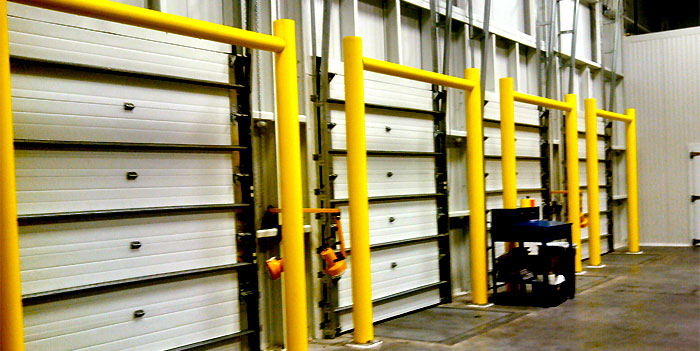
You’ve probably heard the statistics when it comes to the forklift and its safety, but one of the most disturbing is the injury rate compared to incident rate. Forklifts cause just 1% of industrial accidents, but are responsible for a staggering 10% of all injuries in the space. So what can you do to help keep people and industrial traffic separated?
Tags: warehouse safety, traffic management, plant layout
Posted in Safety & Ergonomics|
Another Reminder: The Importance of Lockout/Tagout

We talk safety a lot, mainly because the environment we work in, and the customers we work with use equipment like forklifts and conveyors in areas where interaction with people is unavoidable. We believe the first responsibility we have to our customers, and the first responsibility our customers have to themselves, is safety. Many of the wonderful benefits of material handling equipment comes with the risk of injury. It’s powerful machinery, and people must pick from it, walk near, it or otherwise interact with it.
Tags: Conveyor, conveyor safety
Posted in Safety & Ergonomics|
Safety Automation vs. Safety Training for Warehouse Operations

According to the United States Department of Labor’s Bureau of Labor Statistics there are currently more than 691,000 warehousing and storage workers on the job in the United States, and that’s probably a low number, given that many factories and other commercial facilities have warehouse or restock areas that may not be classified that way.
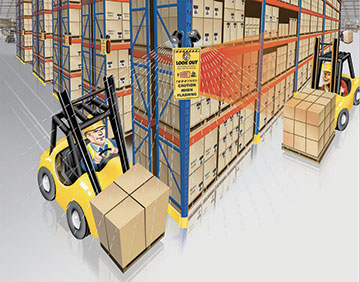
With that many people constantly working in or around potentially hazardous materials, forklifts, near storage areas, and around machines, safety concerns and strategies are a primary issue for warehouses, factories and other industrial operations. Where do you start when you’re working toward a safer operation? Is training enough? Will equipment and systems work on their own?
Posted in Safety & Ergonomics|
Can Warehouse Safety be Automated?

OSHA estimates 85 deaths, 35,000 serious injuries, and another 62,000 non-serious injuries. More than 11% of forklifts are involved in these accidents every year, meaning that the forklift in your warehouse is statistically destined to have an accident before it goes out of service.
Almost 40% of forklift-related accidents involve a pedestrian
And this doesn’t take into account the accidents that damage property, but don’t hurt people. Forklift-to-forklift collisions, or forklift colliding with warehouse racks aren’t included in these numbers if people aren’t injured.
Tags: warehouse safety, forklift safety, sensors, collision avoidance, Automation
Posted in Safety & Ergonomics|
Video: Slip & Trip Accidents
Check out this video from ESH Safety News America for some common ways people fall in a variety of situations. The video is informative, and sometimes funny (see the shovel part), but the consequences of a slip & fall accident certainly are no laughing matter.
Tags: industrial accident prevention, plant safety
Posted in Safety & Ergonomics|
Safety and ROI for Industrial Operations

In a recent blog post, Auburn professor Dr. Kevin Gue, one of the bright minds in the industry when it comes to the business of industrial distribution and plant operations, reflected on the reaction to his ProMat 2013 talk on “Designing a Worker-Centric Facility”. Gue has smart points about the relationship between safety and ROI – and how you can deal with those issues.
Tags: industrial safety, ergonomics, ROI
Posted in Safety & Ergonomics|
Protecting Order Pickers in Rack Aisles

“We need help before someone gets hurt”
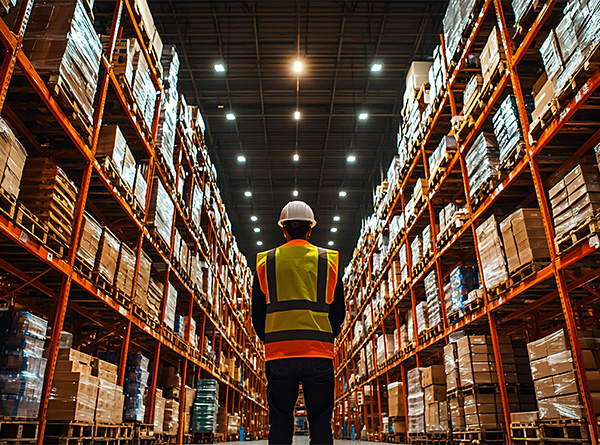
The situation is familiar: in a busy warehouse or distribution center, you can have dozens or hundreds of order pickers that walk the floor with carts and clipboards or scan guns to pick orders for shipping. These are usually focused people who have the job in mind. After all, you’ve probably told them how speed is of the essence – which it is. The problem is that in many or most operations, there are also forklifts, walkies, or electric powered jacks operating in the same space, often in tightly spaced pallet rack aisles.
And guess what? The guys driving those forklifts are busy and focused on the job, too. It’s almost assured that if you have this situation, you’ve had accidents, or near-accidents — which you may never hear of, until the near-miss isn’t a miss at all.
Posted in Safety & Ergonomics|
How to Store Stacks of Empty Pallets

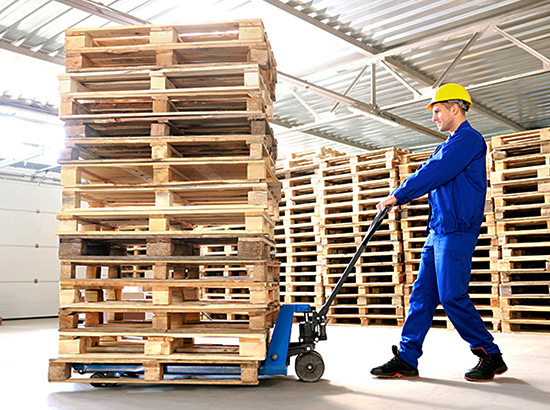
Most distribution and manufacturing operations deal with empty pallets. Sometimes, a lot of them.
Empty pallets take space you could use for something else as they clutter your receiving area. Sometimes they’re splintery, with nails protruding from the sides ready to bite a passerby. People re-use their pallets, holding onto them for a period of time until they’re used for an outbound shipment. But while they’re in your facility, they can eat space, potentially injure people, and generally cause trouble.
Posted in Safety & Ergonomics|
How to Make Warehouse & Plant Visitors Safer: A Guide

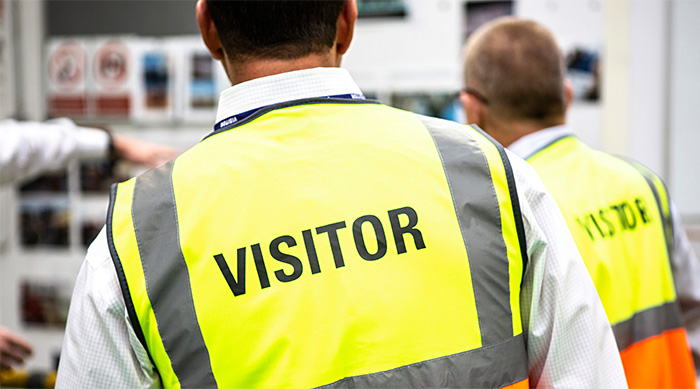
In a fast-paced distribution center, there is plenty of forklift traffic, moving conveyors, packing machines, carousels, and dock doors. Same with manufacturing; you have all kinds of production machinery, welding (human and robotic), and heavy material being handled, stacked, or processed, along with the forklifts and other handling equipment. It’s hard enough to keep your own people – the ones who should know the lay of the land – safe in these environments. But what about visitors who haven’t had the benefit of your safety training and the situational awareness that your employees develop over time?
Tags: Safety & Ergonomics, warehousing, Manufacturing, industrial safety, pallet racking
Posted in Safety & Ergonomics|