
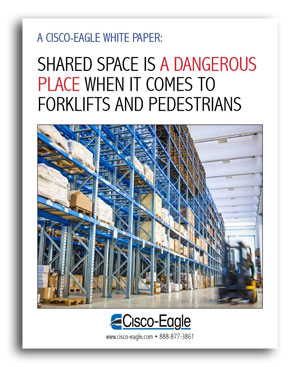
36% of forklift injury accidents involve pedestrians. That’s tens of thousands of accidents a year in the U.S. alone, a great many of them with direct bearing on pedestrians, who are at great risk. Due to the sheer mass of forklifts, they are particularly dangerous for pedestrians. Almost all these accidents result in serious injuries due to the mass and size of forklifts. Forklifts account for 1% of industrial accidents, but 10% of injuries. That statistic alone should put dealing with lift traffic and the ways it threatens walking employees, order pickers, and others a top priority.
Read the rest of this entry »
Tags: industrial safety, warehouse safety, AisleCop
Posted in Forklift - Pedestrian Safety|
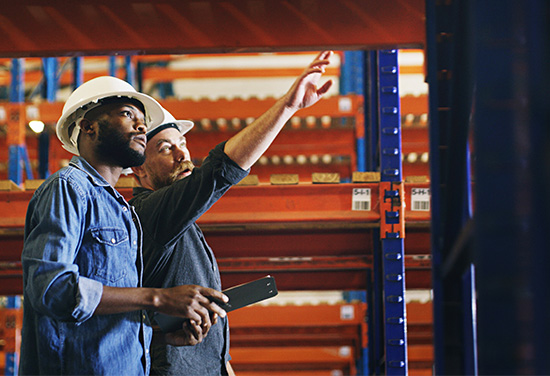
Industrial workplace safety bears repetition and consistent reinforcement
For manufacturing and distribution operations, workplace safety doesn’t just protect workers—it optimizes productivity and helps drive revenue growth. It also helps protect company assets, reduces downtime, and increases morale. What can you do to protect your employees in picking, packing, material handling, assembly, maintenance and similar work? To answer this question, we spoke with leading manufacturers and distributors. Here’s what they had to say: Read the rest of this entry »
Tags: Hytrol, industrial safety, Unex, ergonomics, WireCrafters
Posted in Safety & Ergonomics|
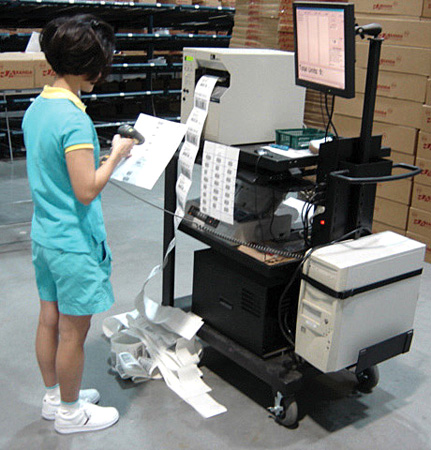
Reducing steps and wasted time
How many steps do your floor managers take going back and forth to the computer and print stations in the plant as they do their jobs? How much time does all that walking take over a year’s time? How much more work could be done if computers and printers could go where they do? If you’re managing materials going to and from storage, all that travel time is taking valuable people assets away from what should be their primary function. Read the rest of this entry »
Tags: ROI
Posted in Warehousing & Distribution|
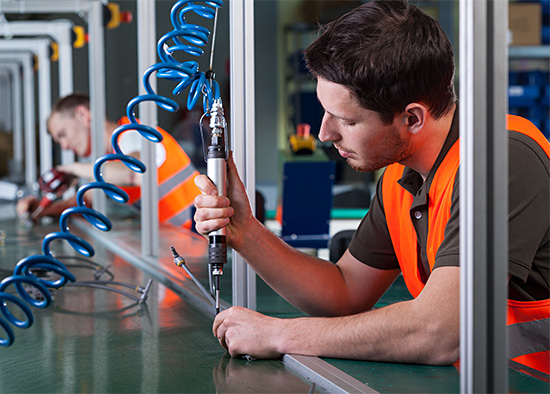
Waste might be the most critical measure for manufacturing operations – waste of labor, materials, time and money. Many companies are faced with nearly constant pressure to cut costs and increase efficiency, even as demand spikes. This means reducing costs without compromising quality or throughput. What are some things you can do to balance these needs?
Read the rest of this entry »
Tags: Cost Reduction, assembly, cost-of-goods, lean manufacturing, ROI
Posted in Manufacturing|

Manufacturing skills gap. Talent shortage. Shifting workforce demographics. What are the trends?
Call it what you will, but the fact remains that the U.S. manufacturing industry faces a pressing issue in the coming years if current worker retirement rates continue to accelerate and projections for industry expansion prove accurate. Research from the Manufacturing Institute and Deloitte indicates there could be as many as 2 million unfilled manufacturing jobs by 2025, up from initial estimates of 600,000. As noted in a Huffington Post article on the research findings, retirement and rapid industry growth are the two driving factors contributing to the skills shortage.
To get a better sense of how the industry is addressing the challenges (and potential opportunities) associated with the increasing skills gap, we recently conferred with industry partners, leaders, and subject matter experts.
Read the rest of this entry »
Tags: Automation, warehousing, Manufacturing, labor, skills gap
Posted in Manufacturing|
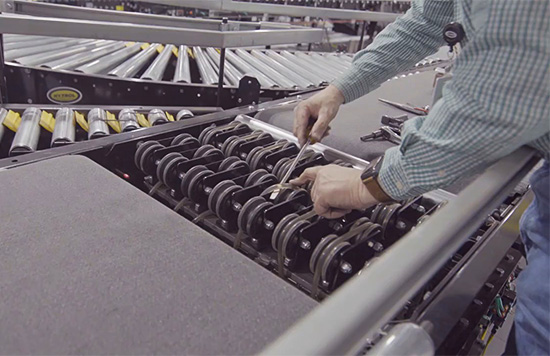
Your conveyors are the unsung hero of your facility, delivering product quickly and efficiently at the push of a button (or automatically in many cases) where it’s needed, when it’s needed. Most people don’t think about their conveyors and automated equipment much, but if it breaks down, you suddenly can’t think of much else. You simply can’t afford downtime when material handling equipment is delivering your core business.
Read the rest of this entry »
Tags: conveyor maintenance, repairs, Conveyor, service
Posted in Conveyor Optimization|
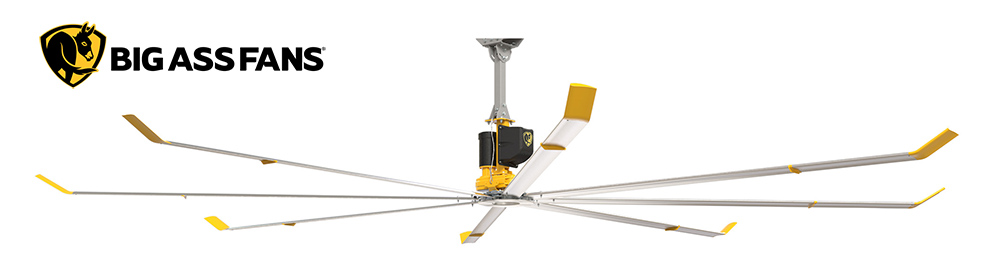
Do areas of your facility require constant temperatures? Are your employees dealing with significant seasonal temperature variations? These situations all require special conditions – often conditions that are hard to control with people and equipment moving in and out all the time. Let’s examine some climate control options outside the world of HVAC equipment.
Read the rest of this entry »
Tags: HVLS, high volume low speed, high velocity, industrial fan, climate control, air circulation, destratification, ventilation, heating, work environment, cooling, fans, high-speed doors, mesh door
Posted in Safety & Ergonomics|
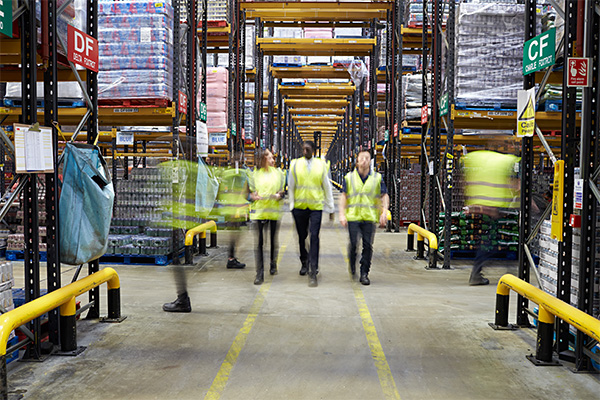
Scene: a typical, busy warehouse
A fulfillment center with row upon row of pallet racks. Eight dock doors occupy one wall of the building, some for receiving, some for shipping. Pick workers work in the rack aisles pushing carts and pallet jacks loaded with picked orders. Other pick workers have empty totes on carts for pulling orders. Fork trucks stock pallet rack and pull bulk stock for large orders. Dock doors are left open much of the time, even when there’s no trailer at the dock.
How many potential safety risks can you envision in this scenario? How do you prevent those from happening?
Read the rest of this entry »
Tags: motion detection, infrared, technology, safety sensors
Posted in Safety & Ergonomics|
Incentive programs are surprisingly common for industrial operations, and they can produce significant savings, quality increases and improved employee satisfaction – if the program is built correctly. In manufacturing, assemblers are often incentivized for quality and speed. In warehousing, it can be reduced product damage, pick rates, error rates or any number of other categories. When companies build out these programs, there are opportunities to create great value. How are companies going about this?
Read the rest of this entry »
Tags: bonus programs, personnel, labor, ROI, industrial, Incentives, warehouse workers
Posted in Manufacturing|
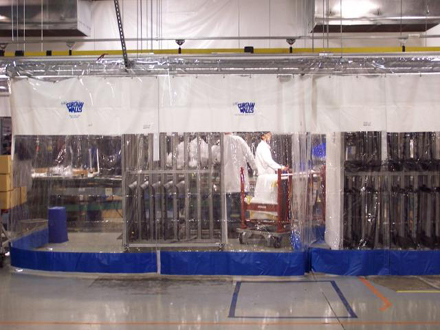
Things get a little messy sometimes in most industrial facilities. Or a lot messy.
Areas where sprays and aerosols are used aren’t friendly to the rest of the operation, but they also need to exist in the same facility. Perhaps thermal zones are needed where there was once plenty of space. Welding stations may be in areas more highly populated with other workers. Amongst all these considerations is also the fluidity of your operations as the company grows and changes. Are permanent solutions (walls) the right answer?
Read the rest of this entry »
Tags: curtain walls, welding screens, acoustic panels, thermal walls, privacy screen, vinyl walls
Posted in Safety & Ergonomics|
Read our customer reviews