



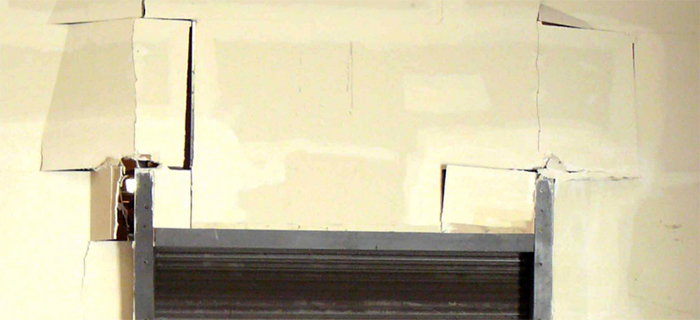
In warehouses where forklifts drive beneath doors, ducts, conveyors, electrical equipment or other overhead obstructions, costly and dangerous accidents can happen. What are some ways to make these pass-throughs safer?
In warehouses where forklifts drive beneath doors, ducts, conveyors, electrical equipment or other overhead obstructions, costly and dangerous accidents can happen. What are some ways to make these pass-throughs safer?
Tags: industrial safety, facility maintenance, forklift safety
Posted in Safety & Ergonomics|
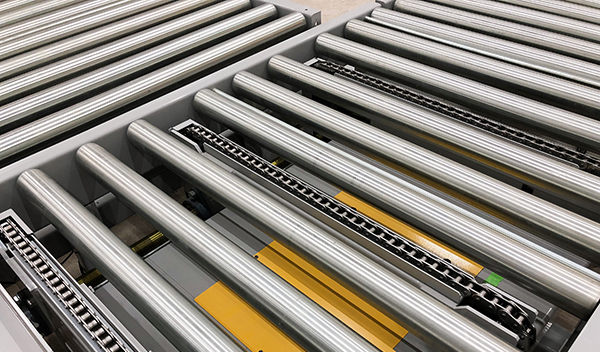
When you need to transfer loads 90 degrees to conveyor lines, machinery or workstations, you have options—both standard and custom. Which transfer works best for your product, application and environment?
Posted in Conveyor Optimization|
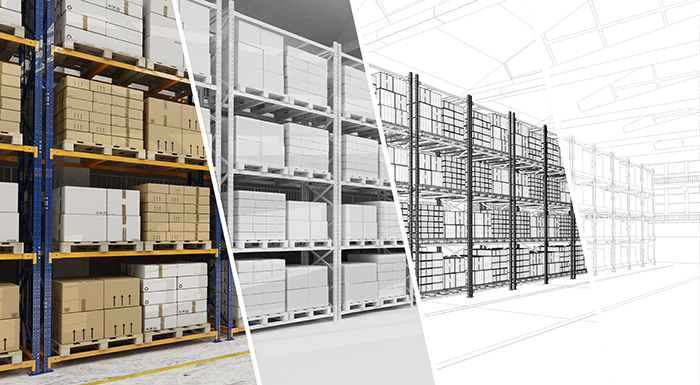
The nature of pallet racks—adjustable beams and teardrop connections on uprights—invites reconfiguration. Many rack manufacturers’ beams easily connect to other manufacturers’ teardrop uprights, which lets you mix & match components. This versatility can invite trouble if all the factors aren’t considered. Before you adjust beams, add new loads or reconfigure your racks, consider all the factors.
Posted in Pallet & Warehouse Racks|
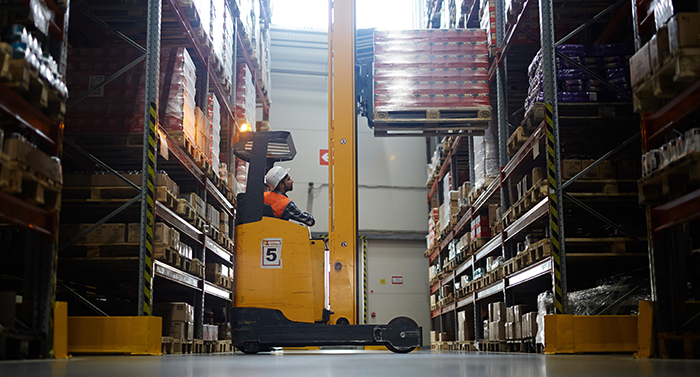
One of the critical aspects of pallet rack system design, aside from the specs of the rack itself, are the various clearances between rack components, the loads and the surrounding environment. Flue space can be critical for fire safety compliance. Space between a rack row and the row behind it can contribute to a safer and more effective rack system. Narrow aisles can contribute to accidents. Too tall? You could cause damaged and falling inventory, as well as damage to fixtures or HVAC components.
At the end of the day, the space around the rack is nearly as important as the rack itself.
Posted in Pallet & Warehouse Racks|
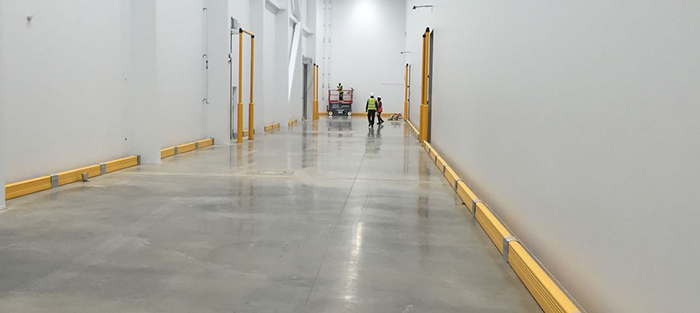
Facility safety for many warehouses focuses on industrial traffic and vehicles like forklifts or stackers, and no wonder—the damage that a simple mistake can do, and the people that can be harmed—is considerable. There are many varieties of guardrail systems, and they all function a little differently but have the same role: solid protection for a critical area when all else fails.
Posted in Safety & Ergonomics|
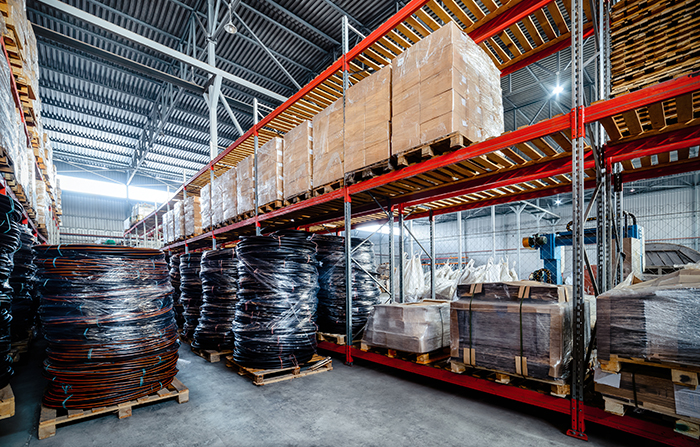
All warehouses have fire risks, ranging in severity. Facilities flammable loads like paper, aerosols, liquors or fiber are at higher risk than others, but any load on wood or plastic pallets can catch fire. For instance, manufacturing facilities with airborne debris are at more risk than those storing ceramics or steel components. While storage racks are not among leading causes of warehouse fires, (or even a cause, except for their loads) they can play an important part in reducing spread and damage.
Tags: Safety & Ergonomics
Posted in Pallet & Warehouse Racks|
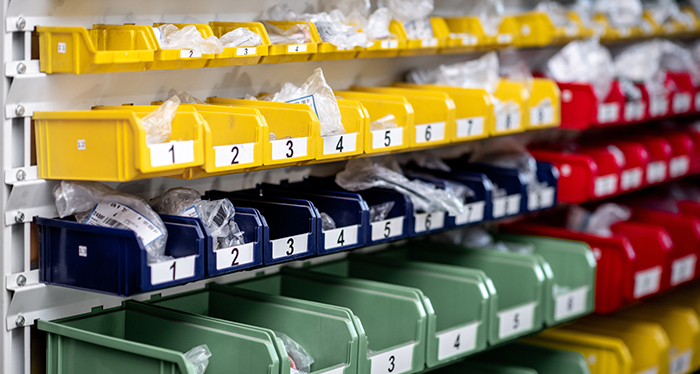
Most warehouses use bins, cartons or containers as bulk product shipments are broken into “eaches” or smaller quantities for putaway, storage and eventual picking. This is also largely true of assembly and manufacturing lines where components are transported between workstations and work is progressively done. While they don’t exactly break the bank given their costs, specifying the wrong container can result in a less efficient, less ergonomic operation.
Posted in Storage, Organization & Workstations|
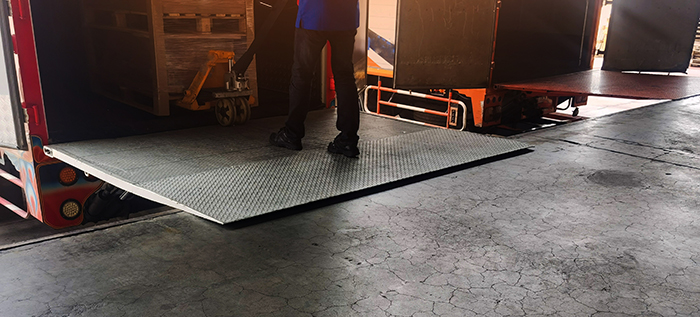
Dock boards and dock plates are built to transition forklifts, pallet jacks, carts, people and other transportation methods between trailers and your warehouse dock area or staging floor. How can you be sure the transition between truck trailers and your dock is safe?
Tags: ergonomics, Safety & Ergonomics
Posted in Docks & Shipping|
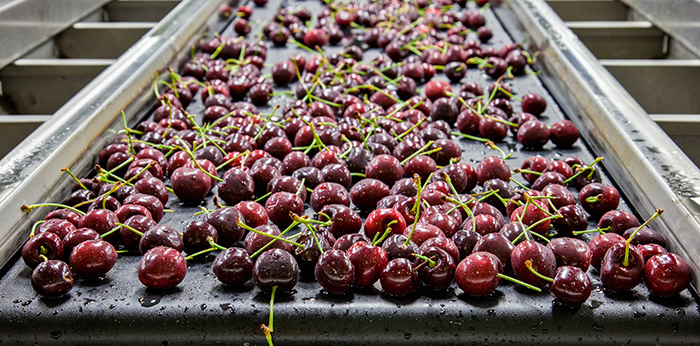
Belt conveyors are used in applications where loads need more support than rollers can give them, usually for things like cartons with irregular bottoms, bags, components and similar loads. They’re sometimes used for small parts, produce or components. The type of belt you specify will usually tie directly to the application, load and operational environment. Here are some questions to ask when you are specifying a conveyor belt.
Posted in Conveyor Optimization|
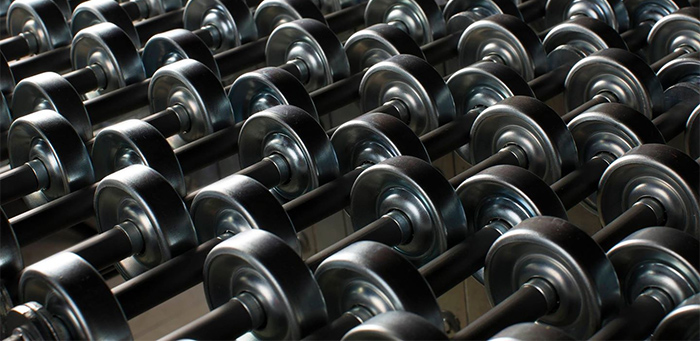
In this installment of Cisco-Eagle’s Shoptalk series, Cameron explains how to select the proper skatewheel for your flexible conveyor. You can use flexible conveyors at docks, shipping areas, packing departments and other places where temporary, mobile conveying is needed. You can extend, retract and roll them to fit into spaces where fixed conveyors aren’t practical.
Tags: Shoptalk
Posted in Conveyor Optimization|