




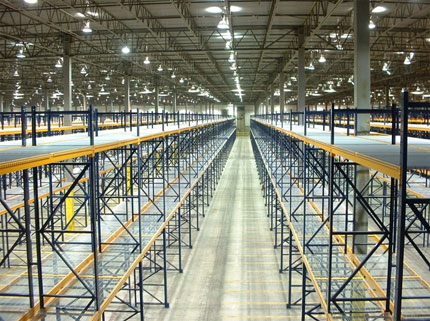
Since overloading is a common source of pallet rack collapses, (in fact misapplication, including capacity issues, is the top cause) it’s important to understand how much weight your rack – not just your beams – can bear.
Since overloading is a common source of pallet rack collapses, (in fact misapplication, including capacity issues, is the top cause) it’s important to understand how much weight your rack – not just your beams – can bear.
Tags: Material Handling, Pallet Rack, rack capacity, safe rack loading
Posted in Pallet & Warehouse Racks|
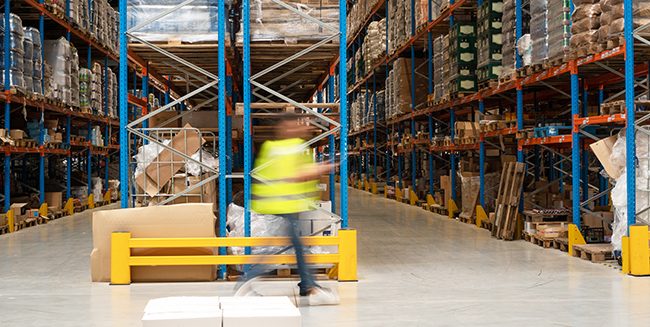
Three areas – picking, packing and returns – incur anywhere from 60% to 80% of labor costs in your typical distribution operation. 60% of the average pickers’ time is spent walking. Not picking, not packing, not checking for quality and accuracy – walking. This is an activity that cannot add value to your operation or to your customers, so you should strive to eliminate it whenever possible. Not only does it waste time, it makes people tired, and tends to cause a loss in focus and can increase error rates.
Tags: order fulfillment, labor, product slotting, carton flow racks, ergonomics
Posted in Order Picking & Fulfillment|
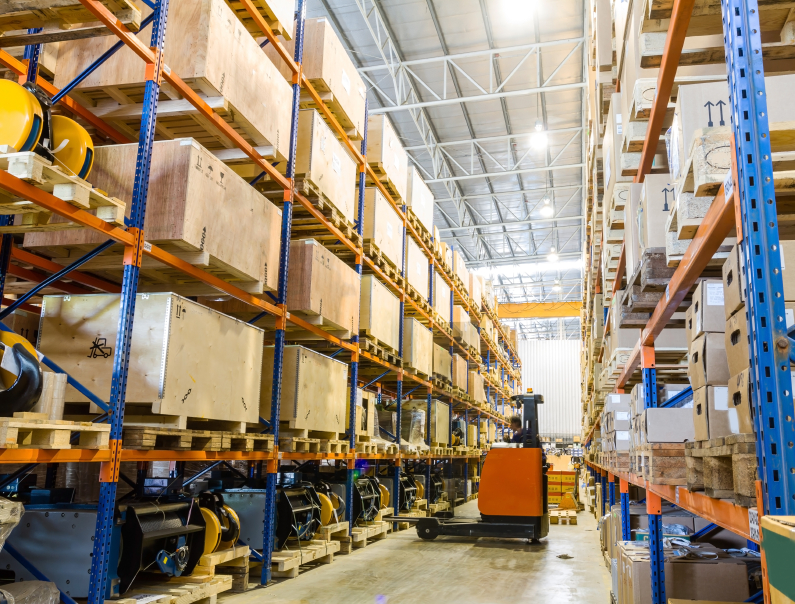
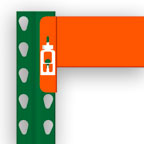
When you are running an operation with lots of racking, it isn’t uncommon to have to replace an occasional upright or beam, or to add new bays onto an existing row. Sometimes you cannot avoid it, as the rack was purchased years ago, by someone else, or from a source you can’t even locate. It might be that you bought used rack and need to fill some gaps in, or it may be perfectly good, 10-year old rack that just needs some damaged components replaced.
This is done all the time, and although it isn’t an optimum situation for rack stability and safety, you can minimize the issues by following the following guidelines:
Tags: warehouse safety, storage, industrial accident prevention, beams, uprights, warehousing, Material Handling, Pallet Rack
Posted in Pallet & Warehouse Racks|
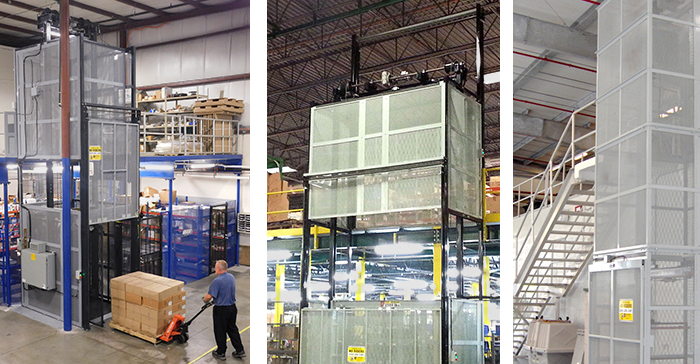
A few months ago, we posted a Guide to Vertical Reciprocating Conveyors (you might find it useful if you’re looking at any application that moves a load up and down at least one level integrated with a shaft, mezzanine or other area). That guide includes the following questions, should be helpful as you move ahead with your project.
Tags: Automation, warehousing, Material Handling, vertical lifts, vrc, mezzanine lifts
Posted in Lifting & Lift Systems|
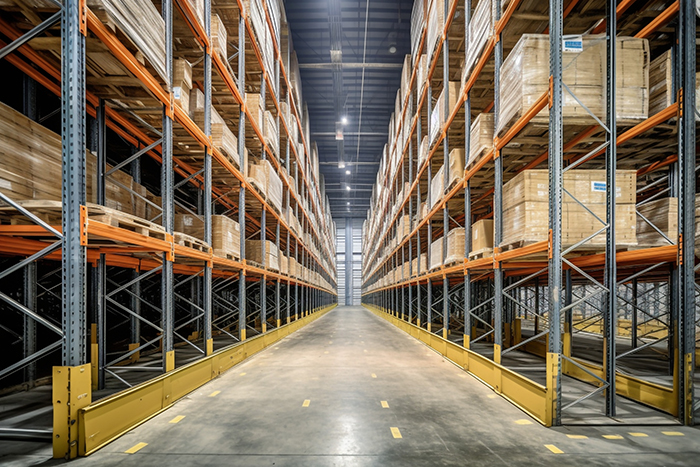
Safety in warehouses tends to be greatly about the interactions between forklifts, pallet racks, people and stored products. This list of rack safety tips is part of our ongoing efforts to help warehouses operate safely and efficiently.
Tags: Material Handling, Pallet Rack, warehouse safety, storage, industrial accident prevention
Posted in Pallet & Warehouse Racks|
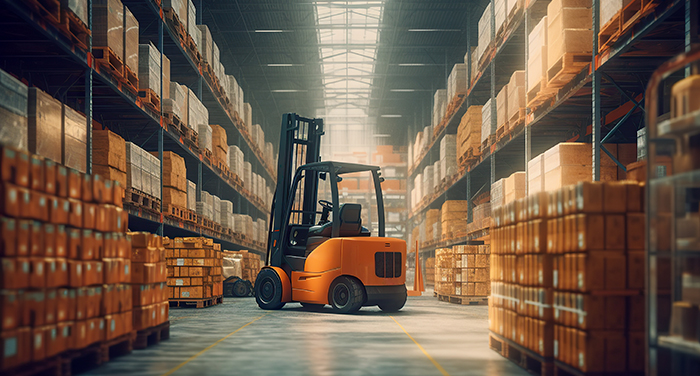
Pallet racks take a beating over time. They get loaded with exceptionally heavy pallets, by exceptionally powerful lift trucks over and over throughout the course of years. Chances are that if you have pallet rack in your warehouse, it’ll get hit at some point. When it does, inspecting (and generally replacing) it is your best course of action. But what about avoiding that hit, or its dangerous aftermaths in the first place?
Tags: Material Handling, Pallet Rack, OSHA, warehouse safety, facilities maintenance
Posted in Pallet & Warehouse Racks|
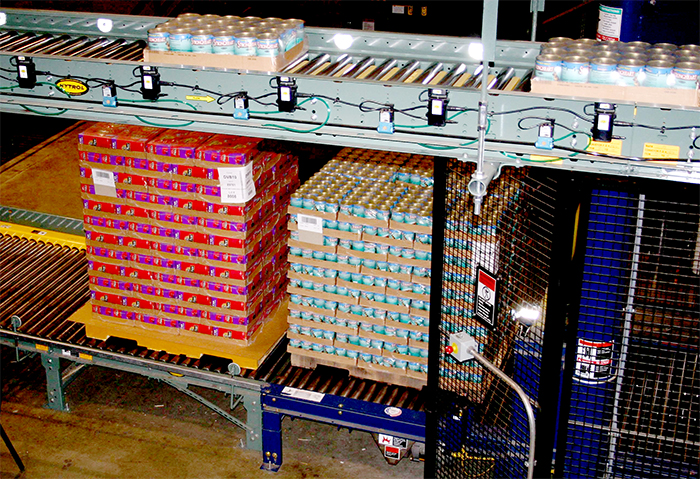
As interest continues to grow in automated palletizing, let’s take a brief look at a few of the issues surrounding these applications.
Over the next couple of months, I’ll be providing a handful of blog postings relative to palletizers. We will begin with what is driving the growth in the use of these products, then a look at basic systems, cost estimates, what you can expect from a properly applied palletizer system, and then share specifics from a couple of actual implementations in distribution centers. If you are experienced in palletizer systems, you will likely be familiar with much of what is covered here. If you are new to palletizing, or considering your first system, hopefully, this information will help you understand what the issues are and how you can navigate them.
Tags: Factory Automation, warehousing, Material Handling, shipping, order fulfillment, Palletizers, palletizing, ergonomics
Posted in Automation, Labor & Efficiency|
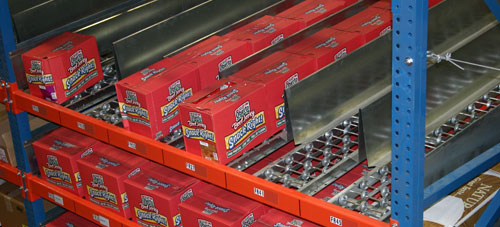
Walk into any order fulfillment operation, and you will see gravity flow rack.
The reason is obvious–it’s one of the best ways to pick orders utilizing first-in, first-out principles. It used to be that there was one kind of the stuff, the plastic-wheel tracks, but these days the choices are more diverse than ever. For the most part, these flow rack types act the same; they decline toward the picker and boxes or totes or even larger components flow toward him. They’re restocked from the rear and picked from the front onto a takeaway conveyor line, a cart, workstation, or another step in the process.
Tags: Material Handling, Hytrol, order fulfillment, Supply Chain, carton flow, gravity flow rack, distribution center, Unex, Keneco, Conveyor, picking systems, warehousing
Posted in Order Picking & Fulfillment|
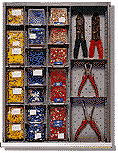 Something we often recommend to save space for our clients is modular drawer storage — for certain operations, in particular those with components, assorted small parts, hardware, or even tool storage, we’re talking about recouping 50% -70% of floor space. Once people have ’em, they love ’em.
But there is more than one way to skin that cat. You can configure different kinds of cabinets to do different jobs. There are hundreds of possible combinations of drawer styles and sizes. Another wrinkle is what happens when you can merge the drawers with steel shelving. It can be new, it can be some you are already using. It begs the question: when is it better to have a cabinet, and when is it better to use shelving and compartmentalized drawer inserts?
Tags: warehousing, Material Handling, security, space savings, tool storage, Industrial Shelving, small parts, modular storage
Posted in Storage, Organization & Workstations|
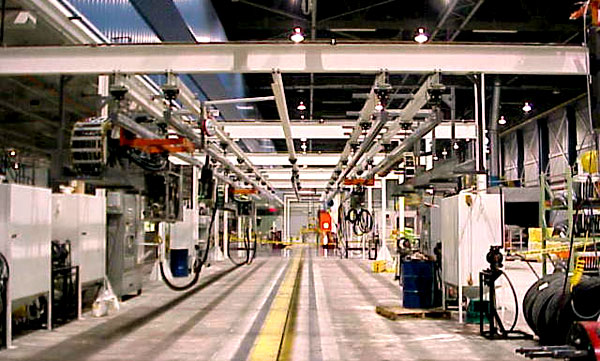
There are many issues of productivity and safety that are stressed as the heat rises. As temperatures start to rise, it gets particularly hot in industrial facilities, warehouses, shops, and distribution centers where air conditioning isn’t always present, extremely costly, or very effective.
Experts say that employee productivity increases when ambient temperatures are comfortable and plummets when they aren’t. Error rates climb and safety is compromised as workers fight through hot, sweaty conditions. Here are some ways you can go about combating the rigors of summer.
Tags: Conveyor, warehousing, Material Handling, industrial safety, heat stress, heat exhaustion, industrial fans, climate control, fans
Posted in Safety & Ergonomics|