


Cisco-Eagle Logo

Industrial Automation and The Flexibility Problem

August 22, 2013

as-rs-system

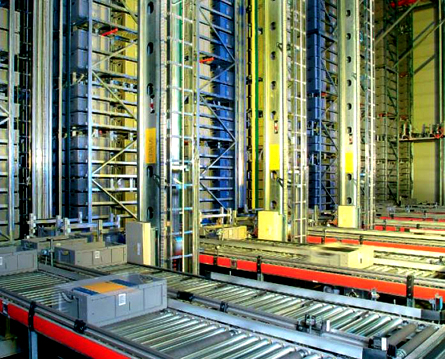
Earlier this year, Food Logistics published a provocative article, “Automate or Die”.  Do you have to automate? Of course not. But it brings to mind a good question: where is the point of acceptable ROI for automation projects? When does it make sense? What aspects are potential pitfalls?

We’re  inside warehouses, distribution centers, commercial operations, and manufacturing facilities every day. We don’t see full scale automation in all — or even most — of these operations. We’ve even seen some companies who have automated go back to picking with carts. We’ve seen others thrive due to their automated projects. The point is, you certainly won’t “die” if you don’t automate. But that doesn’t mean that you should not automate some or all aspects of your operation.

In some cases, we try to make the case that automation isn’t needed. In others, we try to help these companies understand when a capital investment in automation equipment and/or software will save money, increase productivity, reduce problems, and improve their business. It’s not  something that you can do from a distance.  It requires a command of the facts on the ground, in the servers, and throughout the supply chain.

So, the question is, why automate? 
Read the rest of this entry »

Tags: , , , ,
Posted in Automation, Labor & Efficiency|

Can Warehouse Safety be Automated?

June 28, 2013

warehouse corner

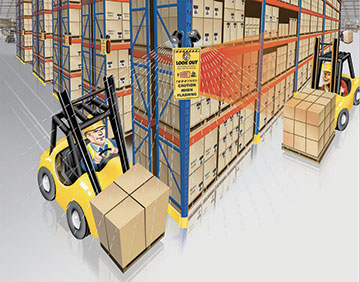
OSHA estimates 85 deaths, 35,000 serious injuries, and another 62,000 non-serious injuries. More than 11% of forklifts are involved in these accidents every year, meaning that the forklift in your warehouse is statistically destined to have an accident before it goes out of service.

Almost 40% of forklift-related accidents involve a pedestrian

And this doesn’t  take into account the accidents that damage property, but don’t hurt people. Forklift-to-forklift collisions, or forklift colliding with warehouse racks aren’t included in these numbers if people aren’t injured.

Read the rest of this entry »

Tags: , , , ,
Posted in Safety & Ergonomics|

Merging Warehouse Operations: The Pitfalls

May 28, 2013

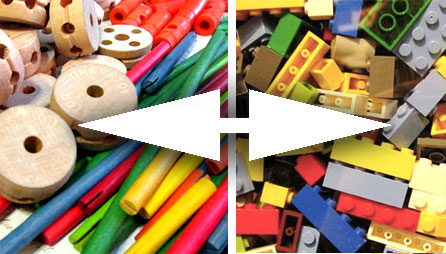
merging an industrial operation is difficult

Merging two formerly separate industrial operations can be more difficult, expensive, and time consuming than creating an entirely new plant. After all, even in the best of scenarios, it’s almost always easier to start with a blank slate. But in these days of consolidations and cost cutting, this can happen to almost any company.  Planning and open communications is the key in general, but there are specific issues you should be aware of.

What are some pitfalls, and how can you avoid them?

Read the rest of this entry »

Tags: ,
Posted in Warehousing & Distribution|

How to Reduce Wasted “Walking” Time in Distribution Operations

April 7, 2013

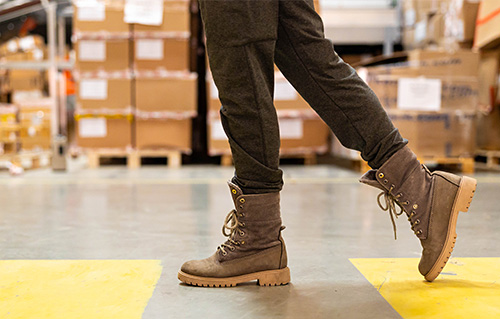
boots walking in a warehouse

There isn’t much value in a worker walking across a facility; value is realized at work areas, not in transit between them. In many operations, order pickers can walk as many as 12 miles a day. This level of walking makes workers tired and more prone to error, injuries, and declines in productivity. While some degree of walking is unavoidable, much of this is simply commuting time to retrieve supplies, or inefficient design that makes the job harder and less efficient than it should be.

How can you reduce time walking, and increase the time people spend getting things done?

Read the rest of this entry »

Posted in Space Optimization & Planning|

Alternatives to New Facility Construction

March 14, 2013

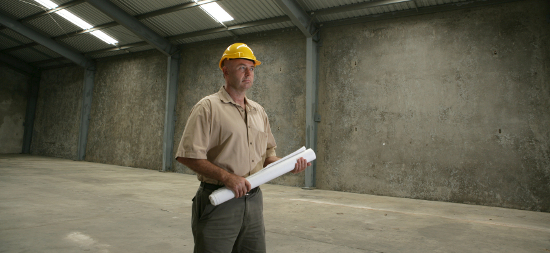
New facility planning

There is nothing inexpensive about a new facility.

The cost of real estate (or lease costs), new equipment, people, regulatory compliance, and potential downtime add up very quickly, even for a relatively small operation. But reconfiguring your current operation has its own challenges. You have to deal with operating in a construction/renovation environment, the potential that the redesign won’t serve your needs through future growth, new equipment, and more. It’s a difficult choice.

Read the rest of this entry »

Tags: ,
Posted in Space Optimization & Planning|

Bridging Warehouse-Office Gap

February 13, 2013

The Gap Between Warehouse and Office

The warehouse. The office.

Sometimes it’s as if one doesn’t exist to the other. As one of our customers told us, “it’s like we have two companies here, and one doesn’t know what the other is up to.”

But when you’re trying to operate better, it’s impossible to separate the two functions. Decisions can be made in one area that can impact the other severely, so communication and cooperation are vital. Too bad it doesn’t always work that way. How can you improve it?

Read the rest of this entry »

Tags: , , ,
Posted in Warehousing & Distribution|

Warehousing: Hidden Productivity Gremlins

January 31, 2013

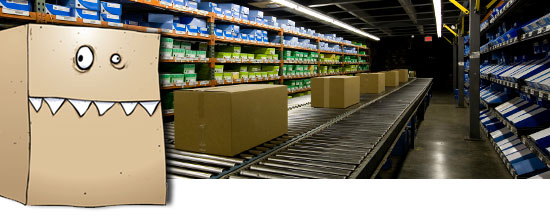
box gremilin in a warehouse

Whether you’re operating a dedicated distribution center or the order fulfillment or stock warehouse of a manufacturing operation, most industrial facilities deal with storage and warehousing to some degree. In the not-so-distant past, warehousing was treated mostly as a cost center – a necessary evil that had to exist so that the more profitable parts of an enterprise could operate. Thankfully, more enlightened thought has prevailed recently.

Order fulfillment and storage are not just places you can save money – they can earn money. If the gremlins don’t get you.

Read the rest of this entry »

Tags: , ,
Posted in Warehousing & Distribution|

Safety and ROI for Industrial Operations

January 30, 2013

Dr. Kevin Gue at Promat

In a recent blog post, Auburn professor Dr. Kevin Gue, one of the bright minds in the industry when it comes to the business of industrial distribution and plant operations, reflected on the reaction to his ProMat 2013 talk on “Designing a Worker-Centric Facility”.  Gue has smart points about the relationship between safety and ROI – and how you can deal with those issues.

Read the rest of this entry »

Tags: , ,
Posted in Safety & Ergonomics|

Ways to Enhance Training to Protect Pedestrians from Forklifts

October 23, 2012

manager in a warehouse forklift area between rack aisles

According to OSHA, training is the key to forklift safety, and there is fundamental agreement on that. Training can and does make a serious dent in the high injury rates suffered due to industrial traffic. Training must happen, and it must be repeated. But that begs this question: Why has training failed to move the needle when it comes to serious forklift related injuries? The numbers seem to have stabilized at an average of 100 deaths per year, and have stayed consistently at that level for years.

Read the rest of this entry »

Tags: , , ,
Posted in Forklift - Pedestrian Safety|

What Does It Cost to Store a Pallet in Third-Party Storage

September 24, 2012

If you’re paying someone to store a pallet for you, what’s reasonable?

Are you overpaying for convenience or location? It’s not easy to compare 3PL vs. 3PL, or even your own warehouse so you know for sure if you are getting value for your money. But there are some basic assumptions you can make to help you understand what you’re dealing with, the costs the 3PL may experience, and reasonable costs for your storage projects.

Read the rest of this entry »

Tags: , , , , , ,
Posted in Warehousing & Distribution|

Read our customer reviews