Warehousing Insights | Material Handling Systems lifts | Warehousing Insights | Material Handling Systems - Part 20
Cisco-Eagle Logo

How to Avoid Loading Dock Injuries

August 3, 2012

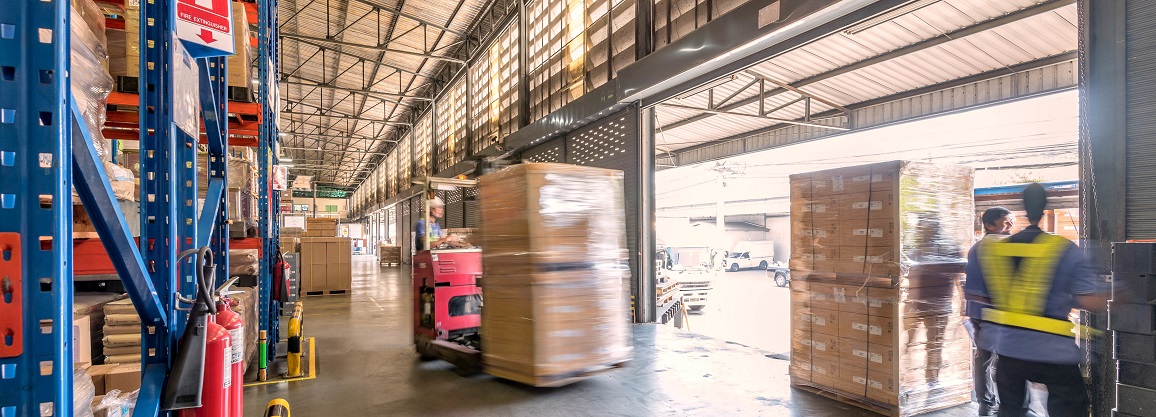
loading dock with forklifts moving

Since 25% of all warehouse injuries occur at the loading dock, warehousing and manufacturing operations need to pay close attention to this area. Shipping and receiving docks both suffer similar problems in that they are bustling places. At peak times they can get very busy, and when people are pressed for time, they become careless. So, what are the common injury types, and what can you do to avoid them?

Read the rest of this entry »

Tags: , , ,
Posted in Docks & Shipping|

Factors for Distribution Center Sustainability

July 18, 2012

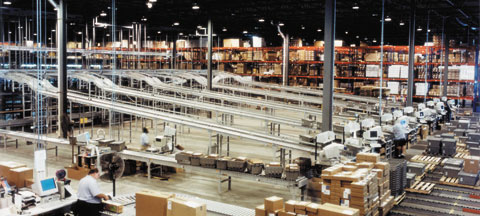
distribution center conveyor system

At Modex 2012, Hytrol Conveyor’s Boyce Bonham sat down with DCVelocity to discuss distribution center sustainability. We’ve linked the video below, which is worth a few moments of your time. How do initiatives to work greener, smarter, and better affect warehouses and distribution operations? Not surprisingly, these initiatives often save money, at least over the long term.

Read the rest of this entry »

Tags:
Posted in Warehousing & Distribution|

Protecting Order Pickers in Rack Aisles

June 22, 2012

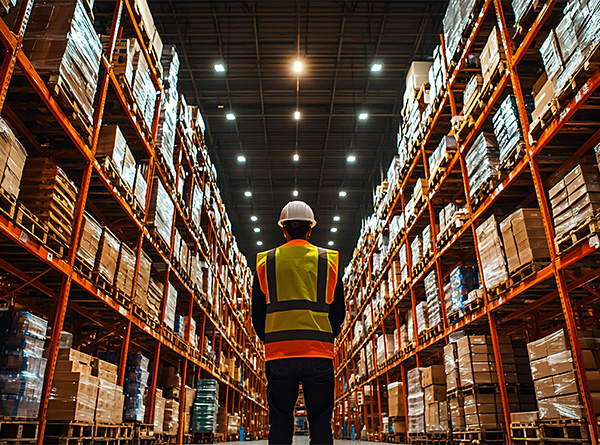
worker in safety vest and hard hat standing in pallet rack aisle

“We need help before someone gets hurt”

The situation is familiar: in a busy warehouse or distribution center, you can have dozens or hundreds of order pickers that walk the floor with carts and clipboards or scan guns to pick orders for shipping. These are usually focused people who have the job in mind. After all, you’ve probably told them how speed is of the essence – which it is. The problem is that in many or most operations, there are also forklifts, walkies, or electric powered jacks operating in the same space, often in tightly spaced pallet rack aisles.

And guess what? The guys driving those forklifts are busy and focused on the job, too. It’s almost assured that if you have this situation, you’ve had accidents, or near-accidents — which you may never hear of, until the near-miss isn’t a miss at all.

Read the rest of this entry »

Posted in Safety & Ergonomics|

Securing High Value Inventory on Pallet Racks

May 17, 2012

pallet rack aisle

It’s always difficult to secure high-value inventory in the warehouse, and it’s even harder when the load resides in pallet racks, which are larger, have a conventionally open design, and more difficult to secure than inventory that sits on shelves or in carousels or within tool cribs.  Pallet rack loads can be palletized or stacked on decking, but either way they are more “open” than other types of inventory.  What are your alternatives?

  1. Use upper bays to keep it out of reach.
  2. Utilize secure aisles.
  3. Store it in a separate area/facility.
  4. Utilize rack-mounted security cages.
  5. Utilize solid-side rack security enclosures.

Read the rest of this entry »

Posted in Pallet & Warehouse Racks|

How to Make Warehouse & Plant Visitors Safer: A Guide

February 29, 2012

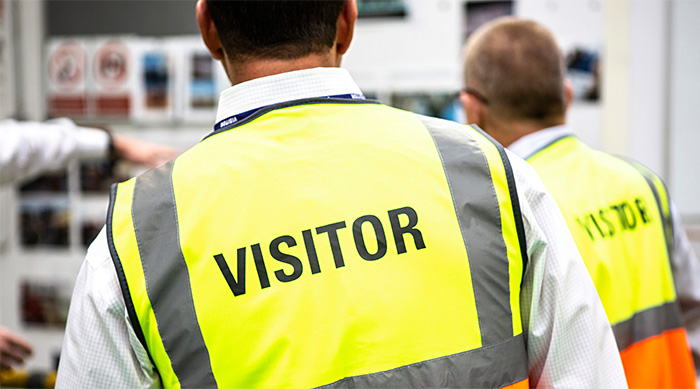
people wearing high-visibility vests marked visitor

In a fast-paced distribution center, there is plenty of forklift traffic, moving conveyors, packing machines, carousels, and dock doors. Same with manufacturing; you have all kinds of production machinery, welding (human and robotic), and heavy material being handled, stacked, or processed, along with the forklifts and other handling equipment. It’s hard enough to keep your own people – the ones who should know the lay of the land – safe in these environments. But what about visitors who haven’t had the benefit of your safety training and the situational awareness that your employees develop over time?

Read the rest of this entry »

Tags: , , , ,
Posted in Safety & Ergonomics|

9 Ways to Reduce Product Damage in Your Warehouse

February 16, 2012

damaged cardboard box with fragile sticker
In warehouse & manufacturing operations, things get broken. They break in a number of ways, and it’s expensive. You’ve probably seen product broken or damaged in amazing and improbable ways  if you’ve been in this business for any length of time. We had a client once buy a bunch of mismatched, used industrial shelving (not from us), only to see it collapse and dump thousands of tiny aircraft components on the floor. It had to be swept up and discarded since it was all mixed up and visually impossible to sort.

Those are extraordinary examples, but everyday inventory damage that cost “only” a few hundred or thousand dollars can savage your bottom line.

Read the rest of this entry »

Tags: , , , ,
Posted in Warehousing & Distribution|

To-Do List for Moving a Warehouse

February 7, 2012

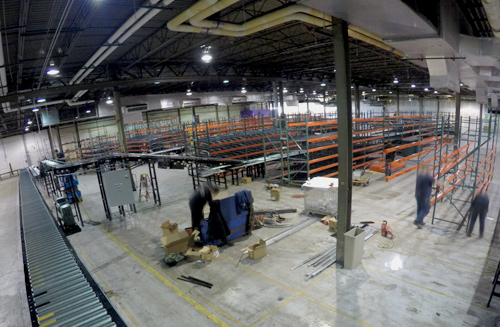
warehouse reconfiguration

Over the past four decades, we’ve seen plenty of operations move. We’ve installed entirely new conveyor systems into functioning operations without disturbing the flow of existing work. We’ve seen companies pick up an entire distribution operation and move it across two hundred feet of parking lot into another building. It’s not new territory for us, and if you have managed a manufacturing or warehousing operation long, it’s probably not for you either.

Read the rest of this entry »

Posted in Warehousing & Distribution|

How the Movies Get Material Handling Wrong

November 15, 2011

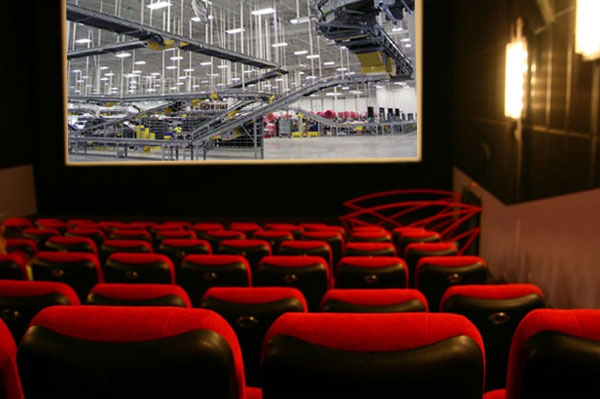
Mateial handling movies

If you are in the warehousing or material handling industry, you’ll find yourself identifying warehouse and handling equipment in movies or television shows quite often. Many of us have seen, for instance, the NFL graphics of a large distribution system used on Fox network for years. I’ve pointed out Hytrol conveyors in movies to my wife for years, to the point where she says it first when she sees it.

For fun, we have put together a list of the more famous scenes in entertainment history involving material handling equipment, and how it could have been done better.

Read the rest of this entry »

Tags: ,
Posted in Warehousing & Distribution|

Smart Labor Management Helps Cut Warehouse Costs

May 22, 2011

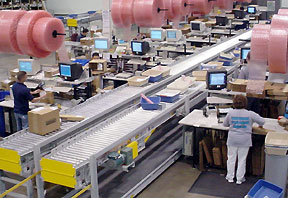
packing operations

It’s important to control costs in your operation. What are some warehousing cost-cutting methods you can employ that don’t require extensive investment or re-tooling? Most of the costs of warehousing operations fall into the following categories:

  • People
  • Real Estate, Utilities & other Fixed Costs
  • Inventory
  • Technology

Read the rest of this entry »

Tags: , , , , , ,
Posted in Warehousing & Distribution|

Options for Bar Stock, Tubing & Pipe Storage Racks

March 24, 2011

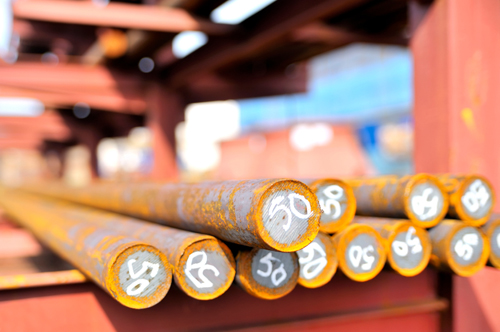
storing bar stock

Especially in heavy manufacturing, machine shops, petroleum or chemical operations, large bundles of pipe, tubing, bar stock or other long, heavy loads must be stored and picked during the day. Multiple ways are available to store these loads.  They can be picked by forklifts, by hand, by hoist or by crane. The choices you make will determine how you access the product (and how easily), how much space it takes and its safety. Here are the options:

Storing it on the floor

In some operations, this is the default method. Sometimes these loads are floor-stored between bollards and a wall, or other obstructions that prevent them from rolling or falling outside the defined storage area. This method is the baseline, and it’s not pretty.

  • Cost: Floor storage has no direct cost. There is not much if any equipment to purchase. Some installations require bollards or posts, or floor striping for organization.
  • Space Consumption: The floor is going to host exactly one bundle in a given area. It’s not going to stack well, and if it does, that’s a potentially dangerous stack.
  • Ease of access: Ever try to pick up a 12′ bar of steel from the floor, or even off a stack? Typically you can use a hoist, but not a forklift. Most of the time, floor loads are hand picked.
  • Safety: An unsecured bundle isn’t safe. But one that sits on the floor isn’t going to fall on anyone, although it might slide out onto legs or feet.

For any significant operation, this is going to slow you down, endanger people and cause inventory damage. It’s acceptable for a very low moving stock that is near to its processing machinery or otherwise in a niche somewhere that isn’t expected to grow.

Cantilever racks
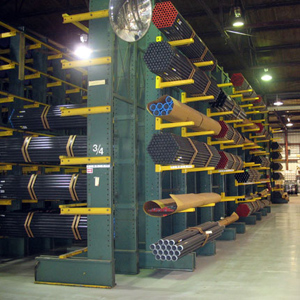
Cantilever racks storing tube stockA good majority of these loads are stored on cantilever rack. Drive around any industrial district and you’ll see cantilever racks holding tube and pipe loads everywhere, and for good reason. It works, it’s relatively inexpensive and it’s durable.

  • Cost: Cantilever rack is cost-effective. It can range from a few hundred dollars to several thousand per rack, depending on the height, capacity, length, etc.
  • Space Consumption: Cantilever racks allow you to place stock (like steel, aluminum or iron) into racks and off the floor so you can utilize vertical space, but you’ll need space for forklift aisles. Cantilever can utilize more vertical space than anything else you can do, so you’ll be able to take advantage of building height with it. Column capacities get into the tens of thousands of pounds and arm capacities into the thousands. For a single aisle of storage, it is the best option. For multiple rows of storage, the aisles tend to reduce density.
  • Ease of access: Cantilever can be loaded or unloaded with forklifts or stackers or by hand (if the load is light enough). The static arm positions tend to make hoists or cranes unworkable, since the upper layers obstruct the lower ones.
  • Safety: If properly specified, cantilever racks can reliably hold heavy loads. Workers need to be cautious when handling any large, unwieldy, heavy item whether racked or not.

Stacking racks

Stacking racks are the most versatile option, but also have severe limitations.
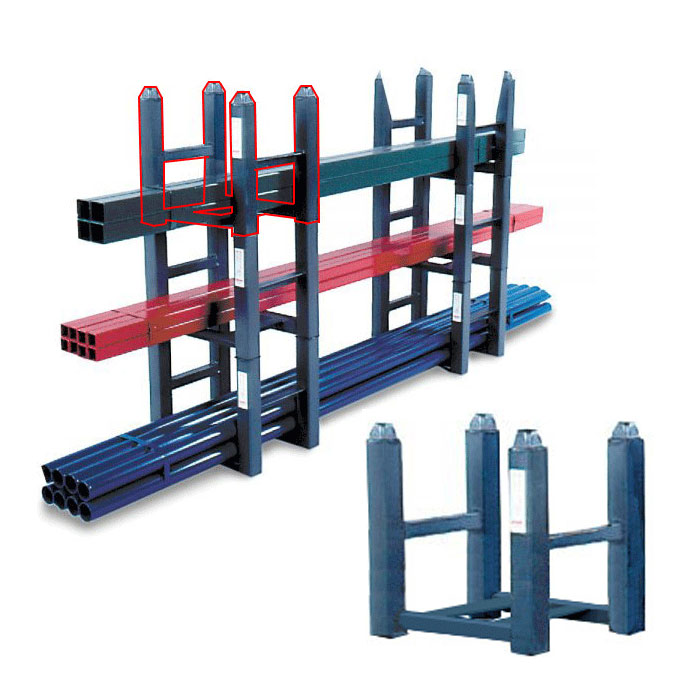
Stacking rack with pipe and tube storage

  • Cost: These racks are inexpensive, but you have to buy multiple ones to accommodate greater lengths of stock or tubing.
  • Space Consumption: Stacking racks can provide a fairly dense product storage method. They can be stacked (depending on type) four to six layers high. They will require aisles for loaders or forklift access. They do not have the vertical utilization a cantilever system does.
  • Ease of access: You must unload the top layers to get at the load in the middle or on the bottom layers, no matter the method you’re using for loading or unloading. This results in what amounts to extra picks every time you access anything but the top layer. For a product that is all the same in a given rack, that’s not a problem – pick a layer off and go to the next. For mixed stock, it’s a disaster.
  • Safety: Stacking racks are stable if specified and stacked correctly. Don’t overfill them or add layers over what the specifications tell you.


Posted in Pallet & Warehouse Racks|

Read our customer reviews