


ploy | Warehousing Insights | Material Handling Systems - Part 22
Cisco-Eagle Logo

Structural vs. Roll-Form Pallet Racks

November 16, 2015

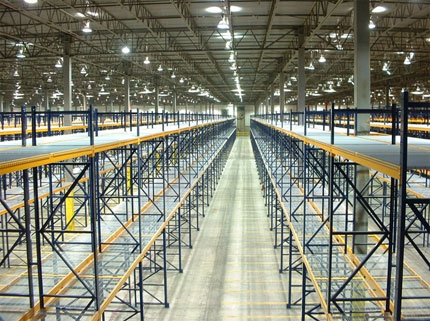
structural rack application

Structural vs. roll-form racks: which fits your application and operation best?

Roll-form selective rack is the standard for many industrial storage operations. It’s the go-to rack due to its teardrop assembly, ease of use, and strength. Because it doesn’t require bolts or other hardware (aside from a snap-on safety clip) to attach beams to uprights, it’s a popular option for selective industrial pallet storage operations. But there is another option: structural rack with bolt-on beam/frame connections, higher capacities and rigidity.

Why would you use structural racks rather than roll-form racking?
Read the rest of this entry »

Tags: , , , ,
Posted in Pallet & Warehouse Racks|

A Guide to Stacking Bulk Materials

November 10, 2015

When you have bulk materials to store and handle, when is it best to stack them on the floor, and when do you need to move it to storage equipment like heavier racks? How can you safely and effectively stack these materials on the ground? OSHA offers some guidelines on the question from a safety perspective. When you do opt for either floor stacking or rack storage, what are some safeguards you should take?

Read the rest of this entry »

Posted in Material Handling|

Safety – A Manufacturing & Distribution Hot Button

November 3, 2015

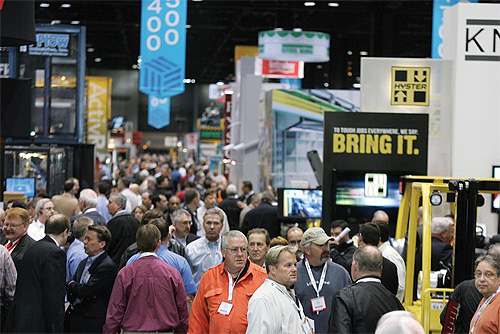
ProMat 2015 Convention Floor

In manufacturing & distribution, safety is an area of top concern, for both the protection of workers and financial ramifications for companies. We spent some time at ProMat with Kelly Kamlager from Ladder Industries to examine the importance of safety and compliance for industrial companies.

Read the rest of this entry »

Tags: , , ,
Posted in Safety & Ergonomics|

Goods-to-Picker Methods and Alternatives

October 29, 2015

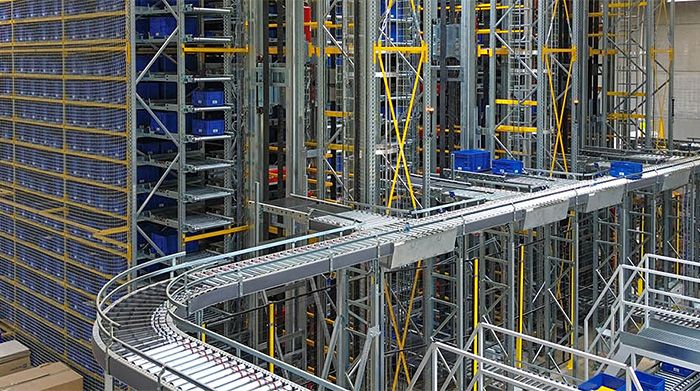
asrs with incline conveyor

The long path from person to product

In a distribution or warehousing operation, the most common working concept is “person-to-goods” order picking, which simply means that order pickers move to storage locations, often pushing or pulling carts and reading orders off the paper. These pickers spend significant amounts of time walking between storage, and are then expected to decipher an order picking sheet. These operations spend lots of money and time and resources on those steps. Picking paths and storage locations evolve as inventory profiles change — and not always for the better.

Read the rest of this entry »

Posted in Order Picking & Fulfillment|

How Automation & Material Handling Extends the Careers of Skilled Workers

September 9, 2015

warehouse worker in forklift

We published an article in the third quarter of the MHEDA Journal, Automation and Labor: Can’t They Get Along? The point of that article is that for American labor, robots aren’t currently reducing employment so much as changing it. Automated industries tend to be more profitable and less vulnerable to offshoring and other job-reducing factors.

Our friends at AutoQuip brought up another point—that automated systems and lifts can add valuable years to the working lives of high-skill, aging employees.

Read the rest of this entry »

Tags:
Posted in Automation, Labor & Efficiency|

Guard Rails and Impact Ratings

September 3, 2015

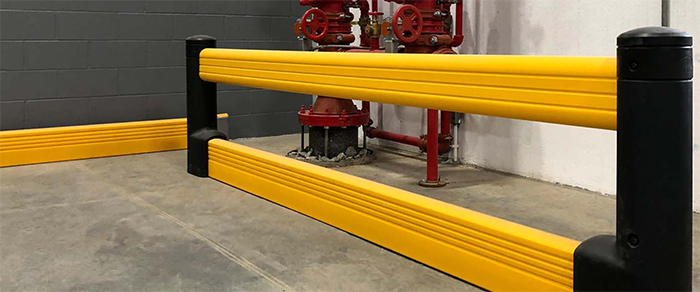
Guardrails protecting a pipe system in a warehouse

Guardrails are used to separate people, structures, machinery and valuable assets from heavy forklifts weighing more than 10,000 pounds. The requirements for durability and impact resistance are demanding, yet many don’t understand what types of impacts their systems can endure, and under what circumstances. The issue is compounded by the fact that many manufacturers simply don’t provide impact ratings for their guard rails. Some companies fabricate and install home-made railing, which is likely to never have been rated at all.

What can you do to ensure your guard railing system can protect your employees and property the way it’s supposed to?

Read the rest of this entry »

Tags: , , , ,
Posted in Safety & Ergonomics|

Falling Item Prevention for Pallet Racks

August 27, 2015

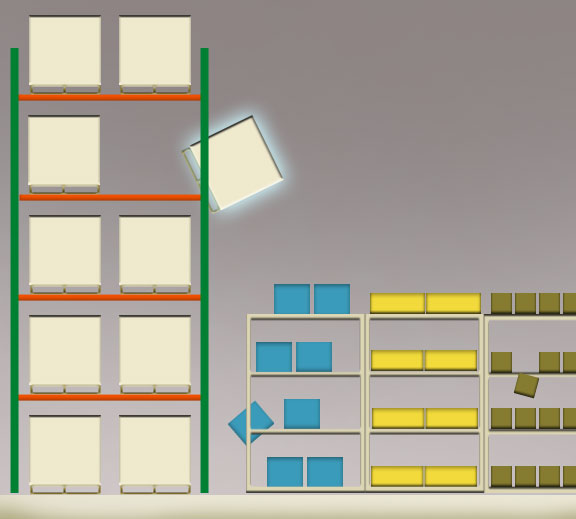
falling items in a rack and shelving system

Heavy inventory stored high on racks have a chance for pallets or cartons to fall. How can you prevent this problem?

Read the rest of this entry »

Tags: , ,
Posted in Pallet & Warehouse Racks|

Conveyors and Falling Item Prevention

August 20, 2015

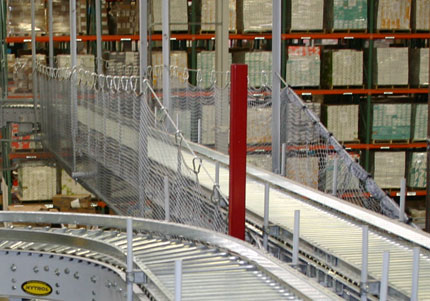
conveyor overhead system

Conveyors are often installed overhead or suspended from the ceiling to help conserve floor space or to interface with mezzanines or platforms. This may create potential fall hazards. Loads can fall from inclined conveyors as they are conveyed up or down, or be subject to other factors that can cause a fall from an elevated line. Even on a floor-mounted conveyor, a spill can split a case, land on an order pickers’ toes, or damage inventory.

Read the rest of this entry »

Tags: , , ,
Posted in Conveyor Optimization|

Storage & Handling: How to Prevent Falling Items

August 17, 2015

falling items in a rack and shelving system

What goes up…

In warehousing and storage operations where inventory is stored high on racks, stacked on floors, slotted into on multi-level shelving, mezzanine deck-overs or on suspended/overhead conveyor as it moves, there is one constant: things will fall. They fall because they’re stacked wrong. They fall because an order picker or a forklift bumps them. Things fall due to seismic activity, machine stops, or silly mistakes. Sometimes it seems like they fall for no reason at all.

What can you do to “stop the drop”?

Read the rest of this entry »

Tags: , , ,
Posted in Safety & Ergonomics|

Industrial Shelving: How To Prevent Collapses and Falling Products

August 4, 2015

Industrial Shelving in a Warehouse

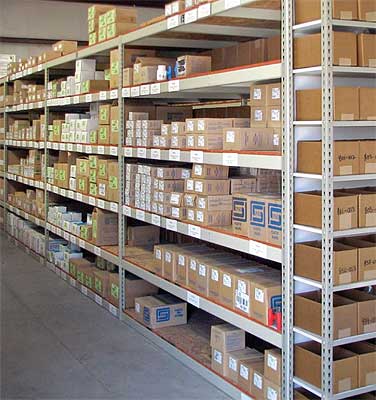
It’s common to store large amounts of inventory on industrial shelving. The diversity of that inventory—bins full of parts, boxes of varying weights and other odd loads—can contribute to the dangers of falling product. Shelves are accessed frequently and by a variety of people, meaning that every time they are loaded, unloaded, picked or bumped, a spill could happen. A falling shelf load could cause worker injuries and of course ruin your inventory. What can you do about it?

Read the rest of this entry »

Tags: , , ,
Posted in Storage, Organization & Workstations|

Read our customer reviews